Seal Rocks: How Many Seals Live There And How Far Offshore It Is
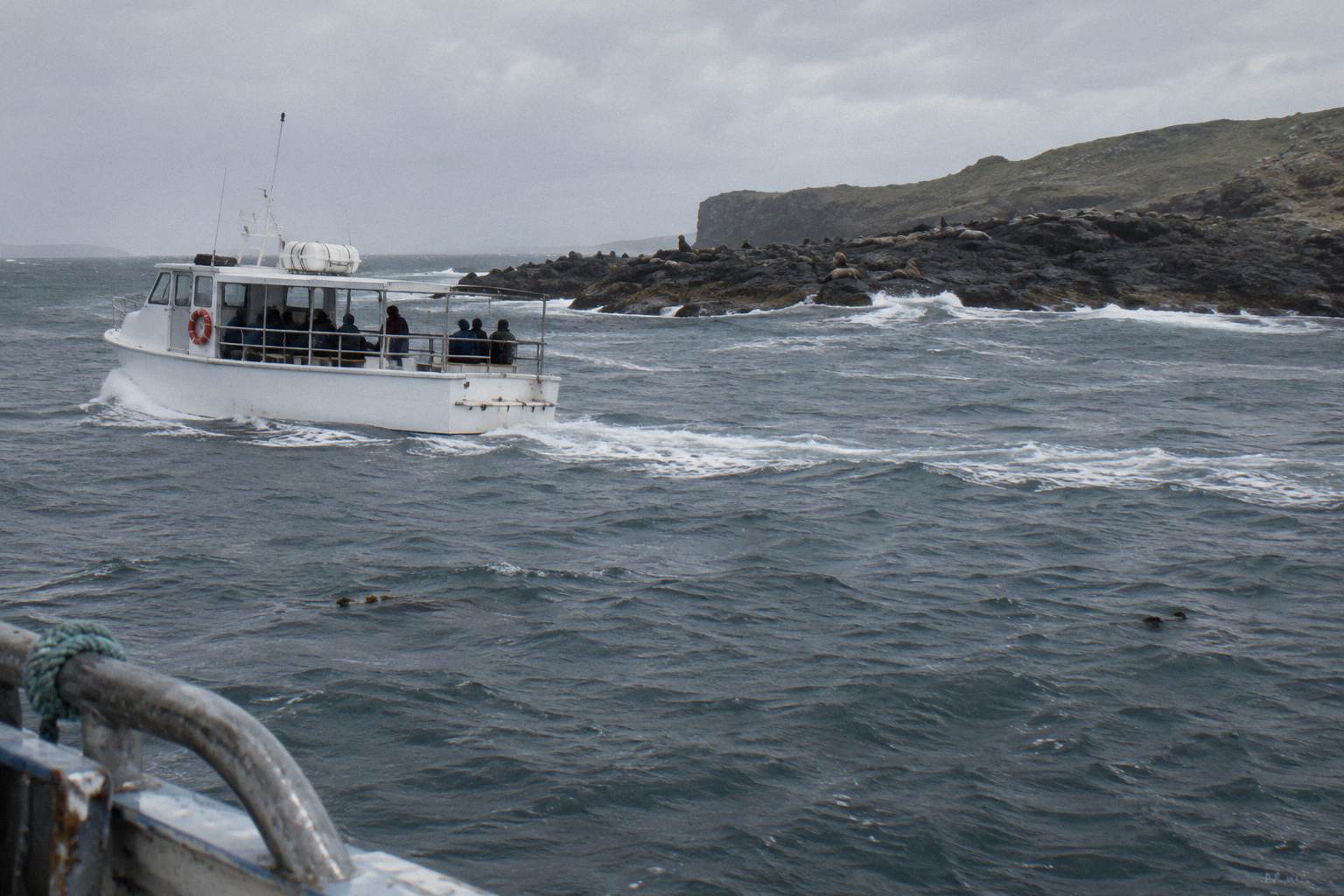
Seal Rocks lies about 2 km off Phillip Island's rugged southwest coast, and the breeding colony there supports about a quarter of all Victorian seals. Those two facts decide whether a boat trip is worth the fare, so here is what every source claims, who says it, and how to read the numbers before booking.
Short answer
Seal Rocks is situated about 2 km off the southwest coast of Phillip Island, the operator's figure. DEECA says the breeding colony supports about a quarter of all Victorian seals and is the largest seal-breeding colony in Victoria. Reported figures put about 20,000 seals using the rocks, with 5,000 to 8,000 ashore at one time. Two cruises visit the rocks.
Seal Rocks is a cluster of granite islets about 2 km off Phillip Island's rugged southwest coast, and the Australian fur seal colony that breeds there supports, in the Victorian environment department's wording, "about a quarter of all Victorian seals". That single sentence carries three claims from three kinds of source: an operator's distance figure, a government colony status, and a set of reported counts that sit somewhere between the two. A reader checking the colony before booking is really asking whether the boat trip is worth the fare, and the plain way to answer that is to separate what is firmly stated from what is reported and what is marketing.
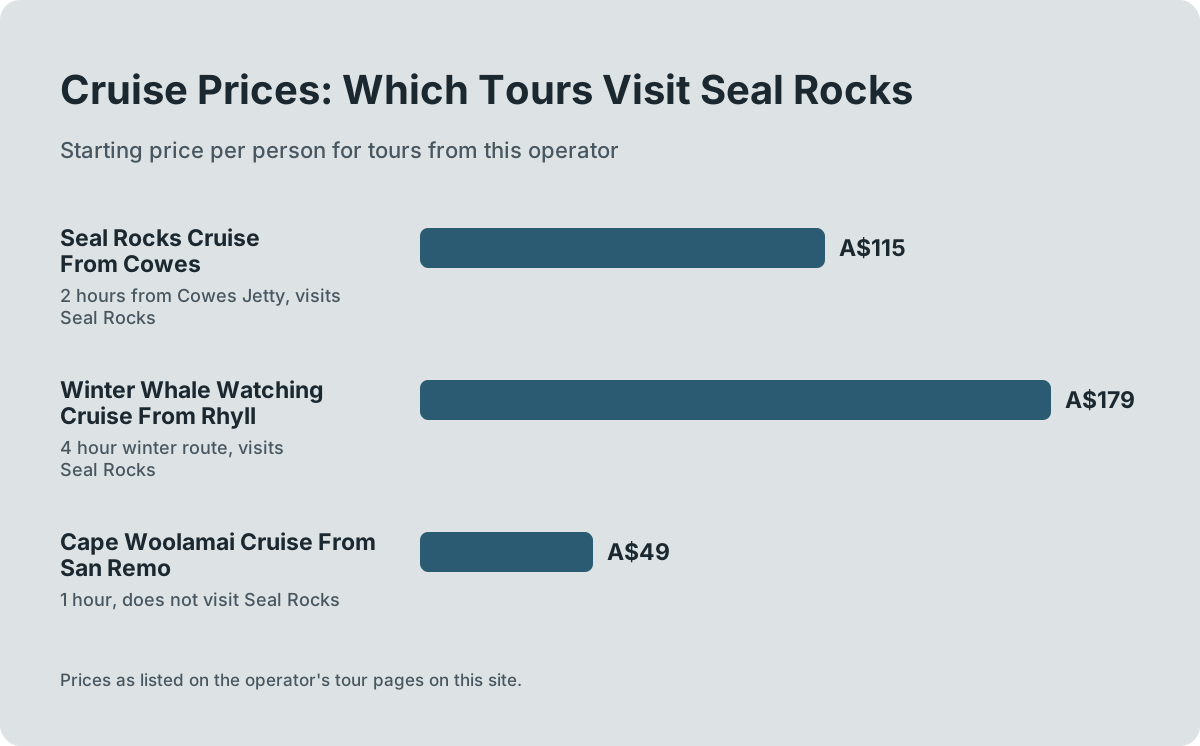
The numbers that matter most for a booking decision are these. The Seal Rocks Cruise From Cowes visits the rocks, runs 2 hours from Cowes Jetty and is from A$115 per person, rated 4.9 from 236 reviews on one booking page and 4.8 from 152 on a second, which is 380+ reviews combined. The Winter Whale Watching Cruise From Rhyll also visits Seal Rocks on its 4 hour winter route, from A$179 per person. The Jetboat Seal Sighting And Sea Caves ride does not go to Seal Rocks at all; it runs to the Cape Woolamai sea caves and Bird Rock, with seals not guaranteed. Amounts in this article are Australian dollars.
How Many Seals Live At Seal Rocks?
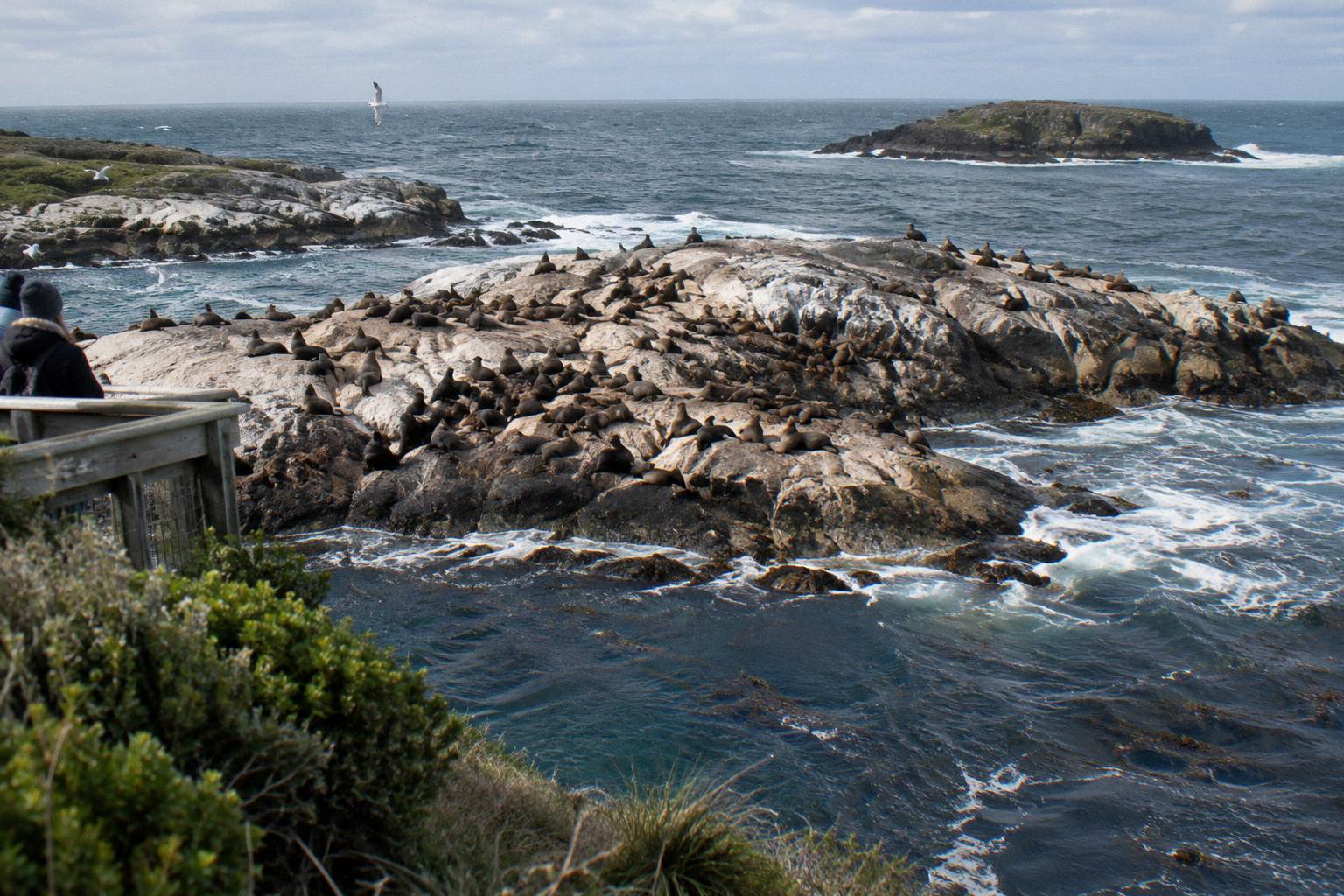
No official running count of the colony exists, but the Victorian environment department states that Seal Rocks supports about a quarter of all Victorian seals and is the state's largest seal-breeding colony. Secondary reports put roughly 20,000 Australian fur seals using the rocks, with 5,000 to 8,000 ashore at any one time.
The hierarchy of claims matters here because the numbers vary so widely that a careless search will leave a reader confused. The government wording is the anchor: the department's protected areas page states the colony "supports about a quarter of all Victorian seals" and that Seal Rocks is where the largest seal-breeding colony in Victoria is found. That is a status claim, not a headcount, and it is the strongest wording available. Nature Parks, the body that manages the island's reserves, uses "one of Australia's largest", which is deliberately broader. Neither source says "largest in Australia", and no page here supports that phrase, so treat any source that uses it with caution.
The reported figures fill in scale. About 20,000 Australian fur seals are reported to use the rocks across the year, with 5,000 to 8,000 ashore at any one time. These come from secondary material rather than a primary census page, which is why the word "reported" travels with them. The published pup counts are firmer as historical data points: 5,660 pups in 2007, 4,092 in 2013 and 3,865 in 2017, with no later absolute count published in the material gathered here. There is no count for the present season, and any site that claims one is guessing.
For a booking decision, the practical reading is simpler than the numbers suggest. The colony is large by any measure, it is the biggest breeding colony in the state, and it is present at the rocks all year because the seals breed and rest there permanently. The question that actually changes a booking is not how many seals exist but how the count you see from the boat relates to the count on land, which the section on the 5000+ figure addresses directly. Travelers who want the seasonal story, pups and bulls and weaning, can read the operator's own seasonal text further down, and those deciding between a boat and the boardwalk can weigh the land viewing option at the Nobbies against a seal cruise.
How Far Offshore Is Seal Rocks From Phillip Island?
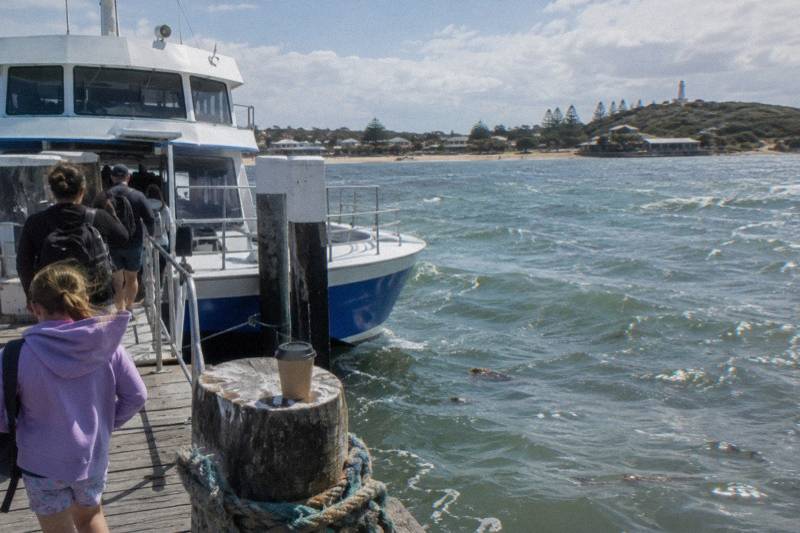
Seal Rocks is situated "2kms off the rugged southwest coast of Phillip Island" in the operator's wording, so the distance to carry is about 2 km, the operator's figure. Other sources give a range of 1.5 to 2 km, which is consistent with the operator's number rather than contradicting it. The rocks sit below the Nobbies headland, and land based viewing from the boardwalk area is possible but the colony remains offshore.
The distance figure matters more than it looks. About 2 km of open water is short enough that a 2 hour cruise from Cowes can reach the rocks, spend unhurried time beside them and return with time to spare, and it is long enough that viewing from land is a genuinely different experience from viewing from a boat. The operator states the distance plainly on its own seal watching page, and the government's protected areas material treats the rocks as an offshore breeding site with specific approach rules, not a beach colony.
No source gives a sailing time to the rocks and none is invented here. What the booking pages state is the total duration, 2 hours for the Seal Rocks Cruise From Cowes, which includes the jetty departure, the run to the rocks, time beside the colony and the return to Cowes. Readers trying to reconstruct a minute by minute itinerary from the distance will not find one published, and the operator does not publish a stop sequence, so ask when booking if a rough shape matters to the day.
The 1.5 to 2 km spread across sources is normal for offshore features measured to different points on a rock platform, and it is not a dispute worth worrying about. The figure to quote is the operator's, about 2 km, because that is the number on the page of the business running the boat. For how the distance interacts with the day's plan, the guide to what happens on a two hour seal boat tour from Cowes walks through the stated inclusions, and the Nobbies boardwalk versus a seal cruise comparison covers the land option for anyone weighing whether the boat fare is worth it.
Which Cruises Actually Go To Seal Rocks?
Two covered cruises visit Seal Rocks: the Seal Rocks Cruise From Cowes, a 2 hour cruise from Cowes Jetty from A$115 per person, and the Winter Whale Watching Cruise From Rhyll, a 4 hour winter cruise from A$179 per person that includes the rocks on its route. The Cape Woolamai cruise, the Sunset Cruise and the jetboat ride do not go to Seal Rocks, and the jetboat runs to the Cape Woolamai sea caves and Bird Rock instead.
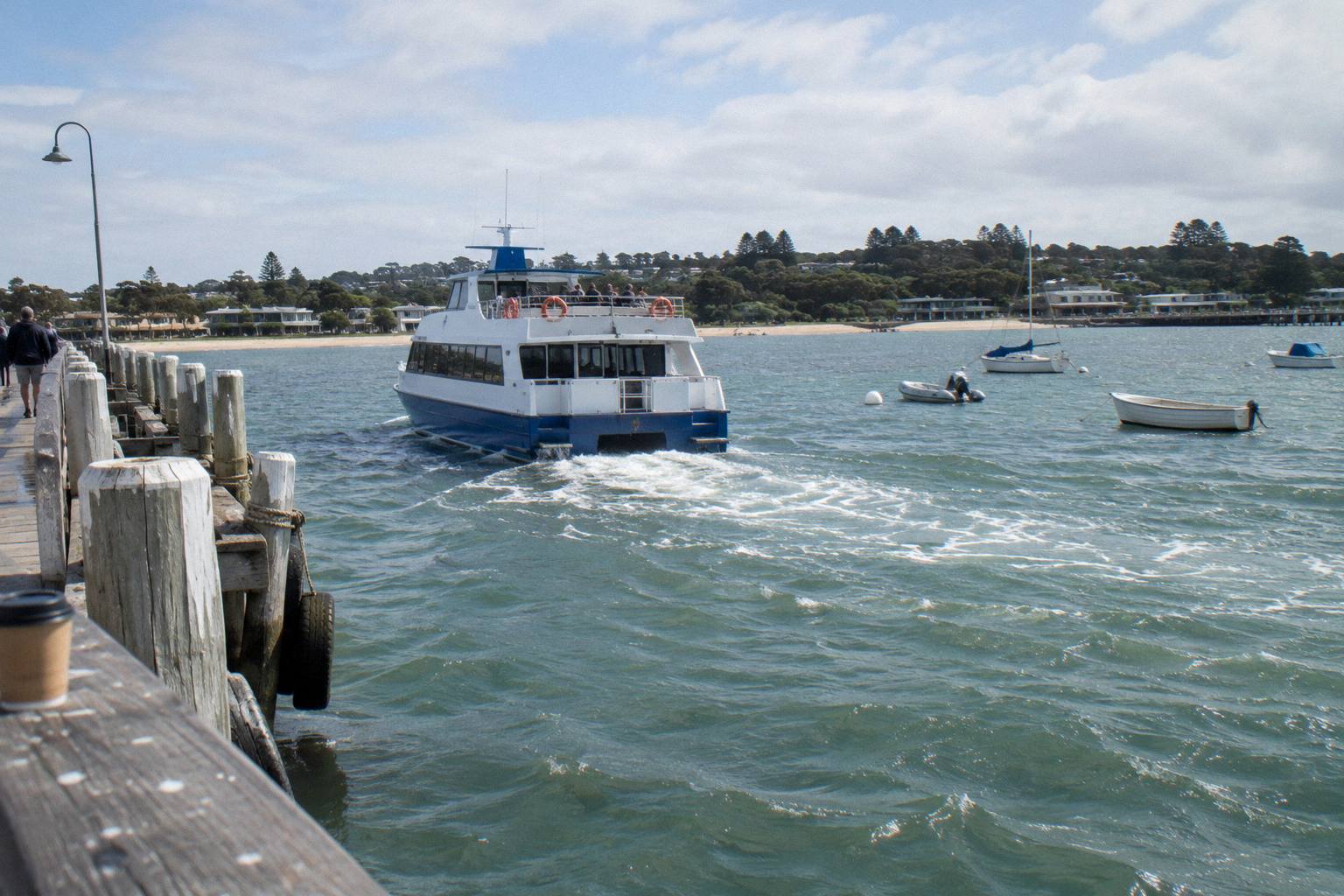
This is the sharpest filter for a booking. Wildlife Coast Cruises runs five of the seven core tours covered on this domain, and they are different boats, routes, jetties and seasons from one operator, not five competing companies. Only two of its cruises list Seal Rocks on the route. The Seal Rocks Cruise From Cowes is the dedicated product: 2 hours, daily at 2.00pm all year, departing Cowes Jetty, with tea and coffee complimentary and cake on the return. The Winter Whale Watching Cruise From Rhyll runs 4 hours, daily early June to early August, 8:30am to 12:30pm from Rhyll Jetty, and it visits Seal Rocks as part of a longer winter route built around whale watching.
The others are worth naming because search results blur them. The Cape Woolamai Cruise From San Remo, 1 hour from A$49 per person, runs all year to the cliffs of Cape Woolamai and under the Phillip Island bridge; seals are not part of it. The Sunset Cruise From San Remo promises no seals. The jetboat ride from Ocean Adventures is a 30 minute Thundercat run with a minimum age of 5 and a 120 kg per person limit, and it does not go to Seal Rocks. Anyone whose heart is set on the rocks themselves should read the cape cruise or seal cruise comparison before choosing, and the San Remo or Cowes jetty decision matters because the two Seal Rocks options leave from opposite sides of the island.
Between the two Seal Rocks visitors, the choice is mostly seasonal. The Cowes cruise runs every day of the year at 2.00pm, so it fits any trip. The Rhyll whale cruise exists only in the winter window, early June to early August, and its whale sighting rate is worded by the operator as "Expected 80-85% - not guaranteed". A winter traveler who wants both the rocks and a chance of whales gets more sailing time for the higher fare; a summer traveler has exactly one option, the 2 pm cruise from Cowes. Winter travelers can also weigh whether a winter whale cruise or the standard seal cruise suits the season better.
The jetboat deserves a plain word because its name includes the word seal. The booking page states wildlife including seals is not guaranteed, the ride runs to the Cape Woolamai sea caves and Bird Rock, and it lasts 30 minutes. It is a fast, small boat experience with a 5 year minimum age, not a colony visit. A reader who books it expecting the rocks will be disappointed, which is the single most avoidable mistake in this market. The full set of seal and wildlife cruises from Cowes, San Remo and Rhyll is listed by Phillip Island Seal Cruises with fares and departure points.
Does The 5000+ Seals Figure Mean You Will See 5000 Seals?
No, seeing 5000 seals is not guaranteed. The "5000+" figure is a marketing average of seals sighted up close across cruises, not a colony count or a per-sailing promise. Separate colony figures exist, including government estimates of a quarter of all Victorian seals at the rocks, and reported secondary figures of 5,000 to 8,000 ashore at one time. Actual sightings on any day vary with weather, season and sea state.
The 5000+ number is the one most likely to mislead, so it is worth unpacking precisely. The operator uses the phrase "An average of 5000+ seals sighted up close", and the same phrasing appears on the Nature Parks partner page for the cruise. An average across cruises is a marketing summary of what sailings have reported over time. It is not a census, it is not a minimum, and it is not what any individual passenger will count from the deck. The operator also says the boat drifts "within meters of the seals", which describes the boat's position relative to the rocks, not a count.
A reader who wants a realistic sense of the viewing question can read how many seals you will actually see on the cruise, which works through the same distinction. The short version for the tours covered here: the colony is permanent and large, the boat travels to it, and the count on the day is not a published figure for any date. Rain does not empty the rocks, but weather can change routes, and the operator states cruises are subject to minimum numbers and weather conditions.
The comparison table for anyone quoting these numbers to a travel companion:
| Claim | Who states it | How to word it |
|---|---|---|
| About a quarter of all Victorian seals | Victorian environment department | "Supports about a quarter of all Victorian seals" |
| Largest seal-breeding colony in Victoria | Victorian environment department | "The largest seal-breeding colony in Victoria" |
| One of Australia's largest | Phillip Island Nature Parks | "One of Australia's largest", never "largest in Australia" |
| Average of 5000+ seals sighted up close | Operator and Nature Parks partner page | A marketing average across cruises, not a colony size |
| About 20,000 seals use the rocks | Reported secondary figure | "Reported", never "official" |
| 5,000 to 8,000 ashore at one time | Reported secondary figure | "Reported", never "official" |
| Pup counts 5,660 (2007), 4,092 (2013), 3,865 (2017) | Published counts | Historical data points, no later absolute count |
What The Colony Does Through The Year
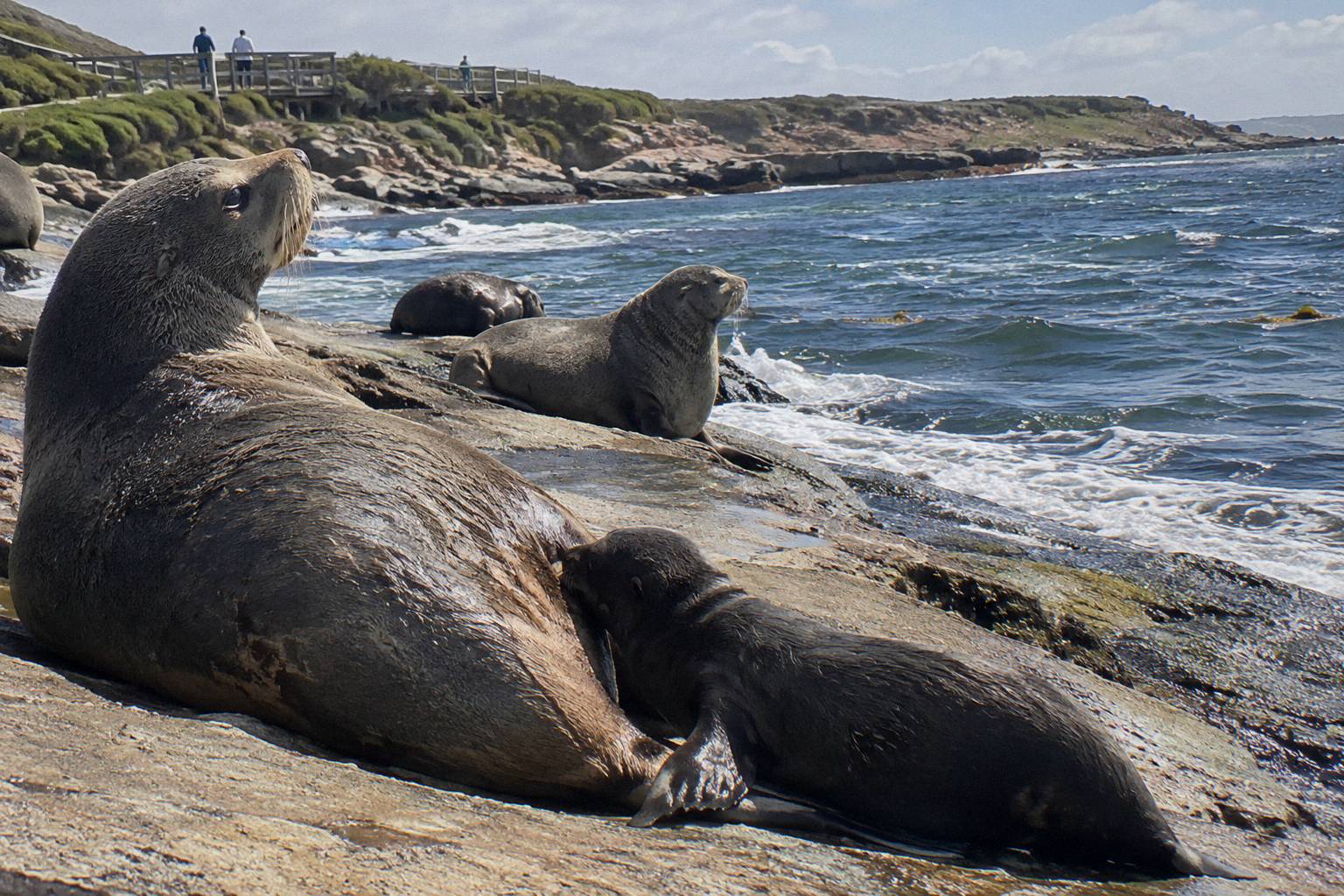
The colony moves through four distinct phases each year: pups are born from late October to mid December with a peak in late November to early December, bulls return in October and the big ones leave again in late December, and between times the animals breed, moult, play, and wean their young, so the Seal Rocks Cruise shows a different colony in every season.
Season changes what the rocks look like more than it changes how many animals are there. The operator's own text is the only seasonal wording carried here. Summer is the breeding season, and pups are born in early summer, taking their first rockpool plunge in late summer. In autumn the pups play and go through a first moult. Winter is weaning. In spring the bulls arrive and fight for territory. None of this predicts what any passenger sees on any day, and the operator makes no such promise.
| Season | Colony activity per the operator's seasonal text |
|---|---|
| Summer | Breeding season, pups born in early summer, first rockpool plunge in late summer |
| Autumn | Pups play and have a first moult |
| Winter | Weaning |
| Spring | Bulls arrive and fight for territory |
The reported birth timing sharpens the summer picture. Bulls are reported to return in October, births are reported to run from the end of October to mid December with a peak reported in late November to early December, and large bulls are reported to leave in late December. These are secondary figures and carry the word "reported" throughout. Never say pups will be visible from the boat on a given day; the boat goes to the rocks, and what the colony is doing when it arrives is the colony's business. Readers planning around pups can read when seal pups are born at Seal Rocks and whether you can see them from the boat, and the best month for a seal cruise guide works the same question into a booking calendar, while the season by season behaviour of Australian fur seals collects the operator's wording in one place.
The 60 Metre Rule And How Close The Boat Gets
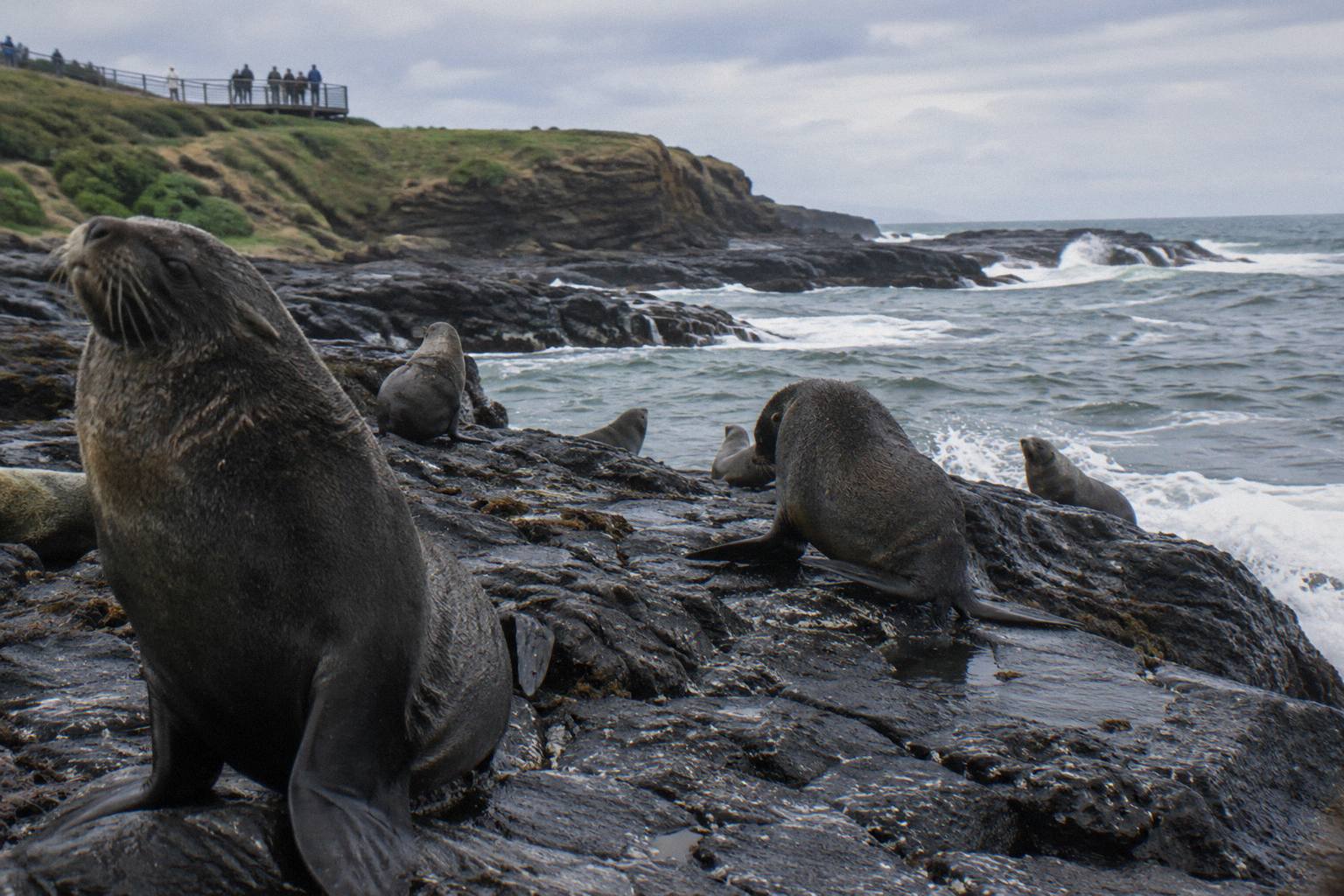
Victorian rules forbid boats from coming within 60 metres of the low water mark at Seal Rocks, though licensed tour operators holding a permit may approach closer under a range of other operating conditions. The government notes the colony's seals are accustomed to humans and can be approached reasonably closely by boat. No source states the exact distance the boat holds on the day, so the practical answer is that it gets closer than 60 metres under permit, distance varies.
The rule exists to protect a breeding colony, and the licensed operator exception is what makes the cruise possible. The department's pages state the distances plainly: boats not within 60 metres of the low water mark at Seal Rocks, jet skis not within 200 metres of a breeding colony, and elsewhere no approaching within 30 metres of a seal on land, with dogs barred within 50 metres and 5 metres applying at jetties and boat ramps. Touching or feeding a seal is illegal. A passenger does not need to track these numbers, but knowing they exist explains why the boat behaves the way it does, drifting rather than landing, and why no one gets off at the rocks.
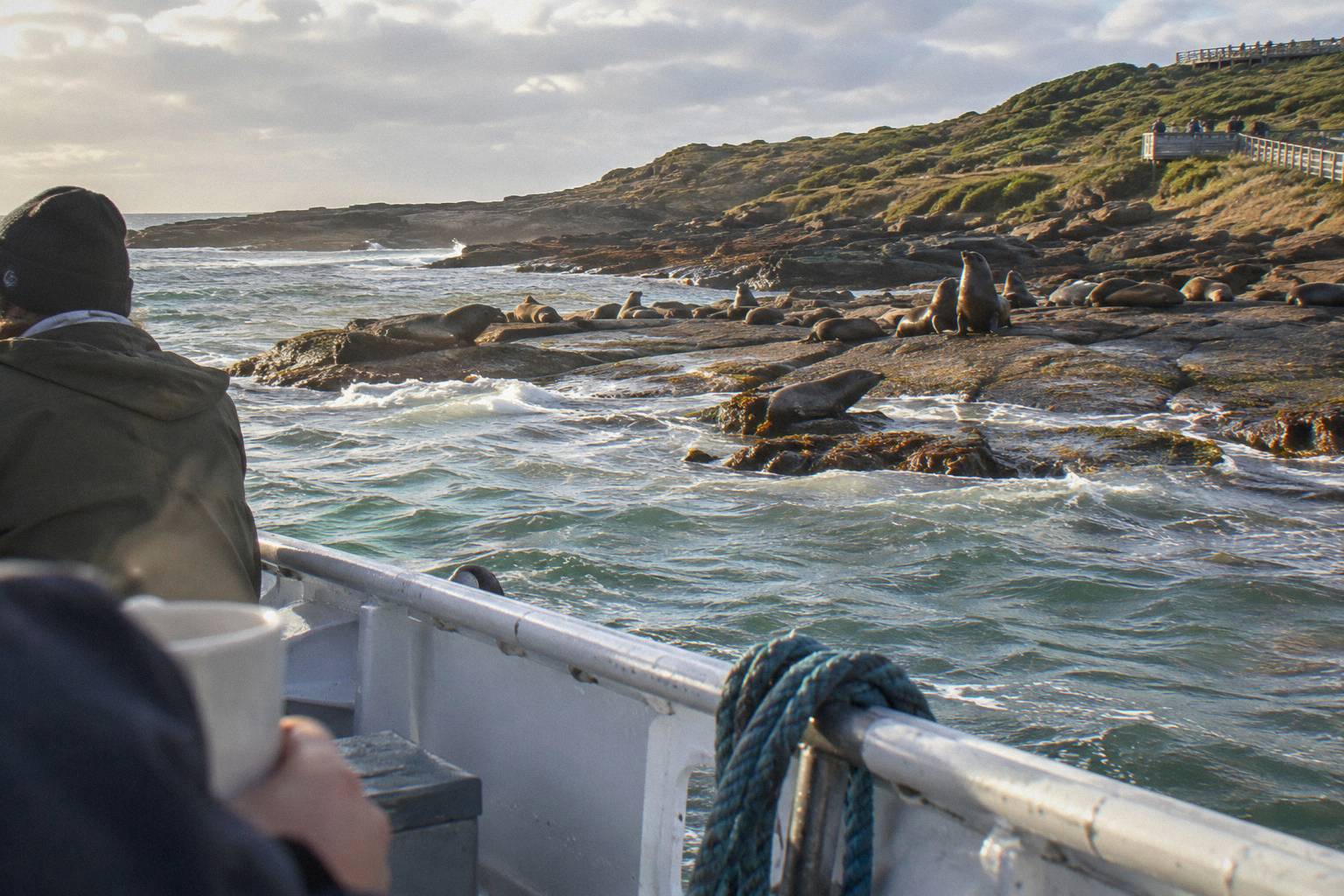
The operator's own wording is that the boat drifts "within meters of the seals", and that is the operator's description of its permitted operation. It is not a distance a passenger should repeat as a rule, and no claim is made here that the cruise stays 60 metres away or goes within any specific distance, because neither claim is published. The rules for swimmers are separate and worth one line: there are no restrictions on how close you can get to a seal in the water apart from protected areas and conduct rules, but swimmers must keep 5 metres from a haul-out, and no Phillip Island operator sells swimming with seals. The rules on feeding or touching seals from the boat cover the conduct side in full, and the department's seal encounter rules and water safety around marine mammals pages state every distance as written.
| Rule as stated by the Victorian environment department | Where it applies |
|---|---|
| Boats must not approach within 60 metres of the low water mark | Seal Rocks specifically |
| Licensed tour operators may approach closer, subject to operating conditions | Permitted tours |
| Not within 30 metres of a seal on land | Seals elsewhere in Victoria |
| Jet skis not within 200 metres of a breeding colony | Breeding colonies |
| Illegal to touch or feed a seal | Statewide |
Choosing A Seal Rocks Trip By Traveller Type
Families with young children fit the 2 pm Cowes cruise: 2 hours, child tickets from age 3, infants 0 to 2 free. A winter traveler weighing seals against whales should compare it with the 4 hour Rhyll whale cruise that also visits the rocks. A visitor without a car finds no Melbourne pickup, though a Melbourne day trip includes the cruise. Seasickness-prone travelers should read the open water wording.
The family case turns on duration and rules rather than wildlife. Two hours is a manageable length for children, the bow deck is restricted to people over 1 metre tall, and all children must be supervised by an adult. The booking page states free cancellation up to 24 hours, which matters when a child's day collapses. The taking kids on a seal cruise guide works through the stated rules, and the fare categories (adult, concession, child 3 to 15, infant 0 to 2, family of 2 adults and 2 children, group of 5 or more) are named on the booking page with amounts shown there for your date.
The winter case is a straight trade of time and money for a second species. The whale cruise from Rhyll costs more, from A$179 per person against from A$115, and runs 4 hours instead of 2, but it visits Seal Rocks and hunts whales with an expected rate the operator words as "Expected 80-85% - not guaranteed". Whales are never promised, and no sighting is guaranteed on either cruise. The no-car case is the one that catches people out: there is no Melbourne pickup from the cruise operator, Melbourne is a drive of about 90 minutes to two hours, and the V/Line coach reaches Cowes with no train. The Melbourne day trip that includes the cruise solves it in one booking for 13 hours door to Penguin Parade, and the getting to Cowes from Melbourne guide lays out the self-drive options.
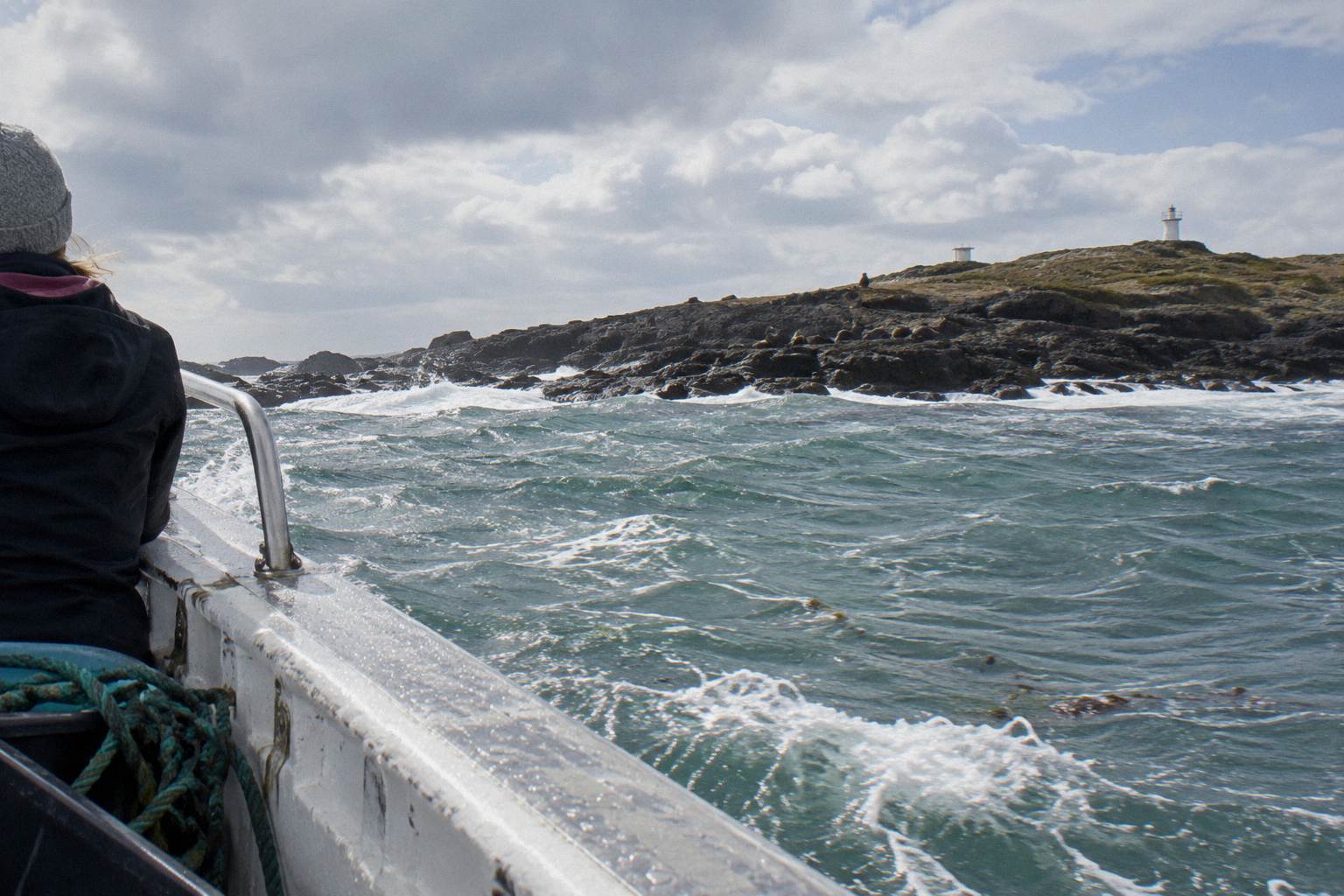
The seasickness case deserves plain wording. The operator states the Seal Rocks tour "travels into open waters and vessel motion may occur at times, taking motion sickness tablets is recommended". Bay cruises are described as generally calm, but the Seal Rocks route is open water, and staff advise booked passengers of sea concerns at least the day prior. Anyone who is unsure should read the seasickness on a seal boat tour guide, take the operator's advice, and mention concerns when booking. The jetboat, for contrast, is a different category of motion entirely: 30 minutes, minimum age 5, maximum 120 kg per person and 300 kg per boat.
What To Ask The Operator Before Booking
Five questions cover the gaps the published pages leave open: which sailing runs on your date, what the sea is doing that week, what the fare categories cost for your group, whether your group size needs the group booking path, and what happens if weather moves the sailing. Every one of these has a partial answer in print and a full answer only from the operator, and asking costs nothing.
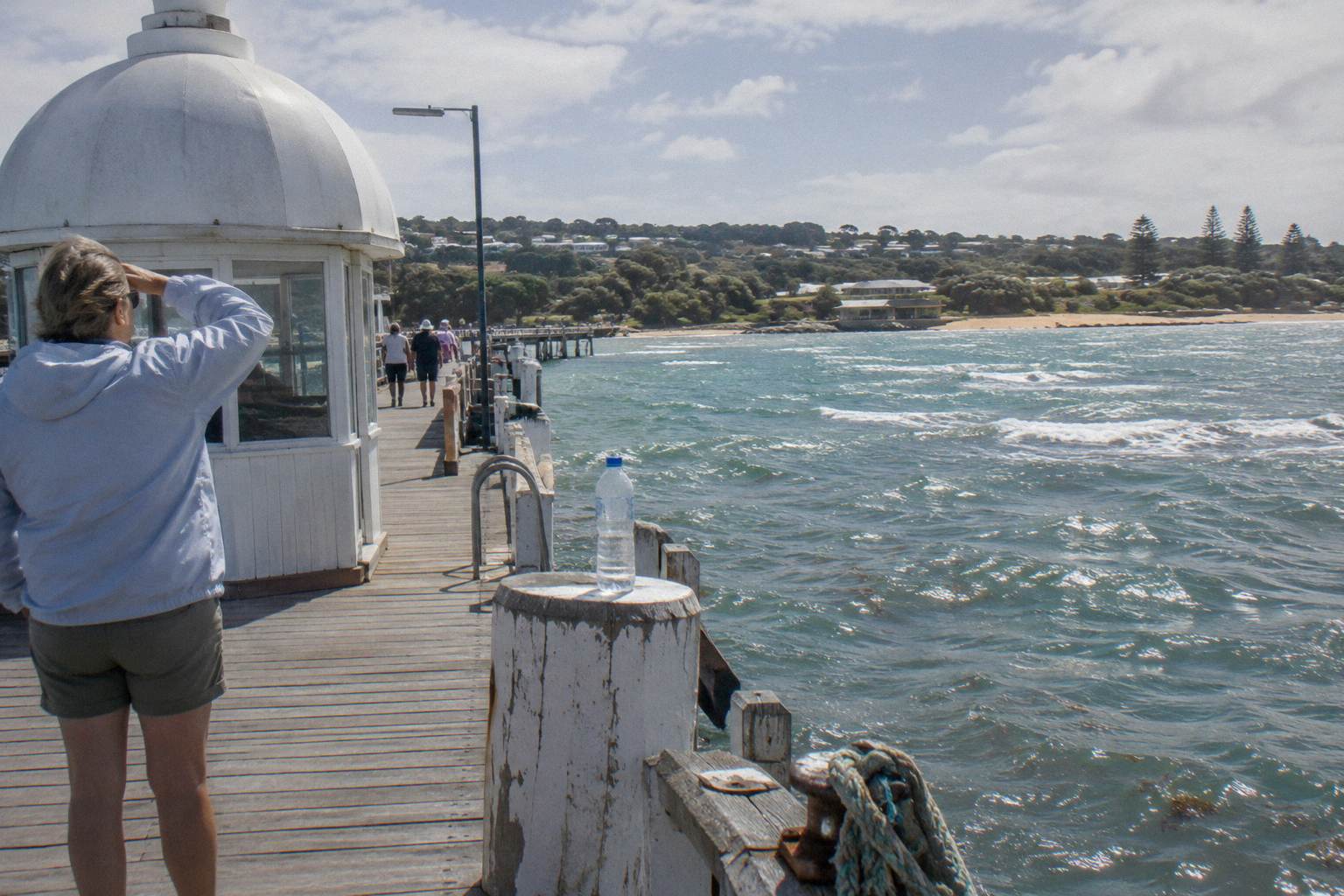
The schedule question comes first because the published answer is a default, not a full timetable. The Seal Rocks Cruise departs Cowes Jetty daily at 2.00pm all year, and Nature Parks adds peak extra sailings at 11.00am and 4.30pm from 26 December to 31 January, with the advice "please check availability". A summer holiday traveler who assumed only the 2 pm sailing exists could miss a time that fits a Penguin Parade evening better; the day built around a 2pm cruise and the Parade shows how the timing chains together. Ask the operator which sailings run on your date.
The fare question matters because only the from-price is published, from A$115 per person, and the booking page shows the amount for your date and your mix of adults, children and concessions. The sea question matters because the operator's advice about sea concerns goes to booked passengers at least the day prior, so booking early buys you that warning. The weather question has a published skeleton: the operator may change or cancel for weather or minimum numbers and a transfer or full refund will be offered, and customer cancellation is free up to 24 hours before departure, with a missed cruise forfeited. The cancellation and 24 hour rule explained post walks the whole policy, and the operator's terms page states it in full.
A practical checklist before paying:
- Confirm the sailing time for your date, including peak extras in late December and January
- Check the bow deck 1 metre rule against the youngest traveler
- Ask the fare amounts for your exact group mix
- Flag seasickness concerns when booking, not at the jetty
- Note the 24 hour cancellation line and the arrive 30 minutes early rule
Mistakes To Avoid When Checking The Colony Numbers
The avoidable errors are all about trusting the wrong number or the wrong cruise. Quoting 5000+ as a colony size, calling the rocks Australia's largest colony, expecting a jetboat to reach Seal Rocks, assuming a count exists for the present season, and treating five differently routed cruises from one operator as five competing companies are the recurring ones. Each is fixed by checking who states a figure and which route a boat actually runs.
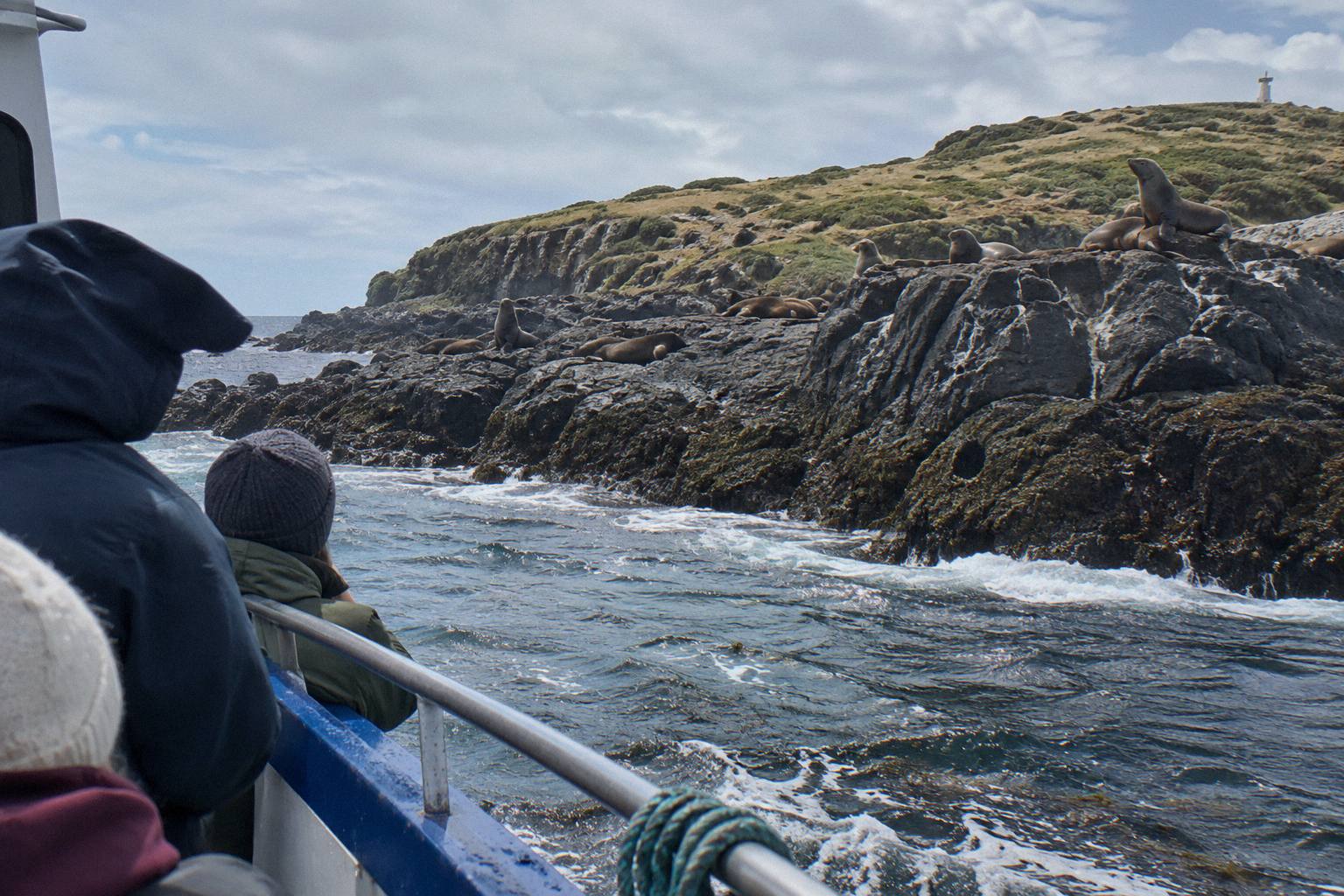
- The operator's "An average of 5000+ seals sighted up close" is an average across cruises, never a colony size or a per sailing count.
- "Largest seal-breeding colony in Victoria" and "one of Australia's largest" are the supported wordings; "largest in Australia" appears on no source here.
- The Jetboat Seal Sighting And Sea Caves ride runs to the Cape Woolamai sea caves and Bird Rock, not to Seal Rocks, and seals are not guaranteed on it.
- No pup count later than 2017 is published in the material here, and no count exists for the present season.
- Wildlife Coast Cruises runs the Seal Rocks, Cape Woolamai, whale, dolphin and sunset cruises: one operator, five different routes and jetties, never five rivals.
- The Sunset Cruise From San Remo promises no seals, and the whale cruises run only in the winter window.
Before closing, one decision remains: which departure actually gets you to the rocks. The Seal Rocks Cruise From Cowes is the year round answer, 2 hours from Cowes Jetty at 2.00pm daily, and the operator's seal watching page states the route and the sailing. You can check the Seal Rocks Cruise From Cowes page for the fare from A$115 per person and the free cancellation up to 24 hours on the booking page. The 2-Hour Seal Rocks Cruise link shows the live sailing times for your date. Winter travelers should also Check availability on the Rhyll whale cruise, the only other sailing that lists the rocks.
Common Questions About Seal Rocks
How Many Seals Live At Seal Rocks?
No live count is published. The Victorian environment department states the colony supports about a quarter of all Victorian seals and is the largest seal-breeding colony in Victoria. Reported secondary figures put about 20,000 seals using the rocks with 5,000 to 8,000 ashore at one time.
How Far Offshore Is Seal Rocks From Phillip Island?
About 2 km, the operator's figure, off the rugged southwest coast. Other sources give 1.5 to 2 km, which is consistent with the operator's number. The rocks sit offshore, and no sailing time to them is published.
Will I See 5000 Seals On The Cruise?
The operator's "An average of 5000+ seals sighted up close" is a marketing average across cruises, not a per sailing promise. How many seals are visible on the day depends on weather, season and sea state, and no count is guaranteed.
Which Cruises Actually Visit Seal Rocks?
Two covered cruises: the Seal Rocks Cruise From Cowes, 2 hours daily at 2.00pm from A$115 per person, and the Winter Whale Watching Cruise From Rhyll, 4 hours from A$179 per person in the winter window. The Cape Woolamai cruise, the Sunset Cruise and the jetboat do not go to the rocks.
Is Seal Rocks The Largest Fur Seal Colony In Australia?
No source here says that. The supported wordings are the largest seal-breeding colony in Victoria, from the Victorian environment department, and one of Australia's largest, from Phillip Island Nature Parks.
Can You See Seal Rocks From Land?
Land based viewing of seals on Seal Rocks exists from the Nobbies area, per the department's own wording, but the rocks are about 2 km offshore. The Nobbies boardwalks and car park are open while the Nobbies Centre, cafe and toilets are closed; confirm status with Nature Parks.