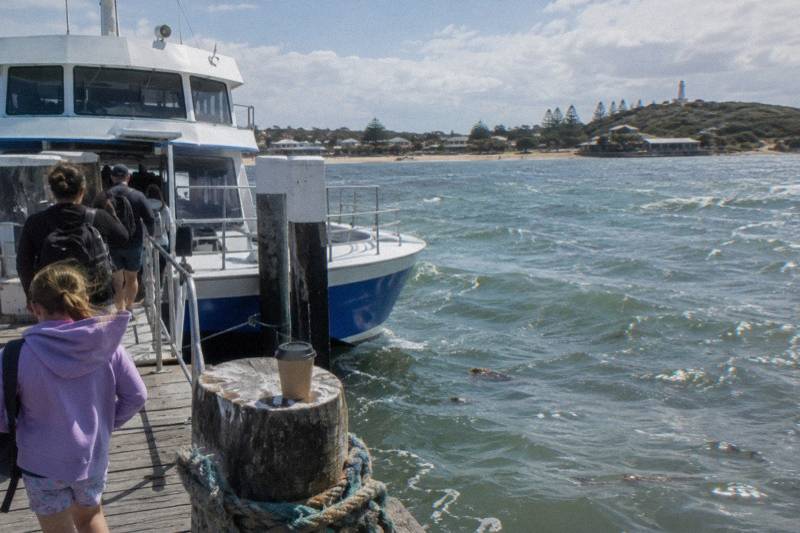
Best Month For A Seal Cruise: Pupping Season, Moulting And Winter Swell
The seal cruise to Seal Rocks runs every day of the year from Cowes Jetty, so there is no closed season to work around. What changes month to month is what the operator says the colony is doing, the averages from the Rhyll weather station, and whether the winter whale cruises are also running.
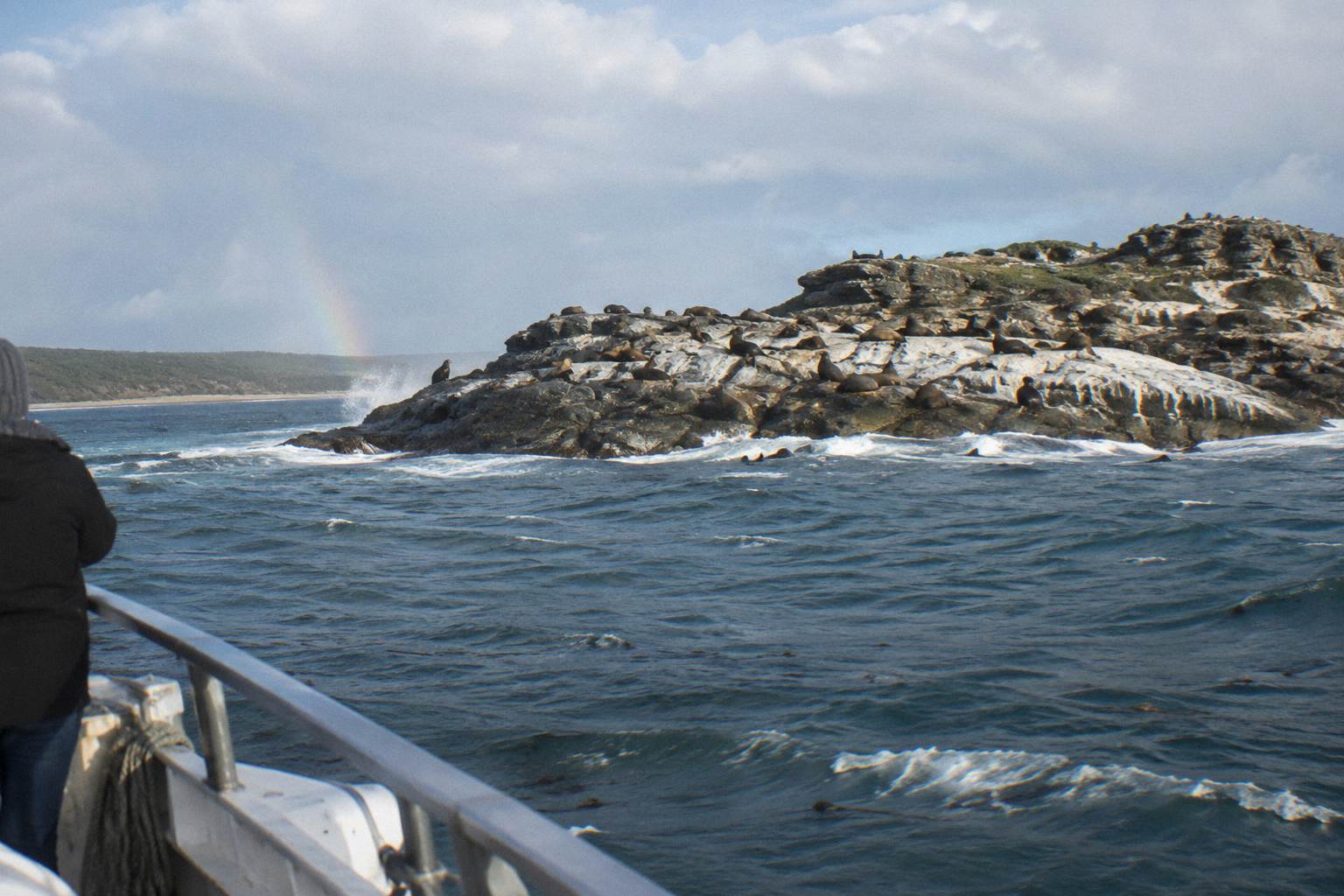
Short answer
There is no single best month. The Seal Rocks Cruise From Cowes runs daily at 2.00pm all year, from A$115 per person, and the operator says pups are born in early summer, play and moult through autumn, are weaned in winter, and the bulls return to fight for territory in spring. Rain day averages peak in July and August, the same months the whale cruises run.
The Seal Rocks Cruise From Cowes leaves Cowes Jetty at 2.00pm every day of the year, which removes the first question most wildlife trips start with. There is no season when the boat stops, and no season when it starts. What actually changes across the calendar is threefold: what the operator, Wildlife Coast Cruises, says the colony is doing on the rocks; the long-run averages from the Bureau of Meteorology station at Rhyll on the north side of the island; and whether you want to combine a seal sailing with one of the winter whale cruises that only run early June to early August.
That makes the month choice a real decision rather than a formality. A family with school-holiday dates, a couple choosing between November and March, and a visitor who would happily swap a seal cruise for a whale morning will land on different answers. The pages on how the colony changes by season and how many seals you actually see carry more detail on each of those threads, and the operator's own seasonal descriptions are the backbone of what follows, quoted as the operator words them.
Amounts below are Australian dollars, and every fare is a booking-page from-price per person.
Which Month Has The Most Seals On The Rocks?
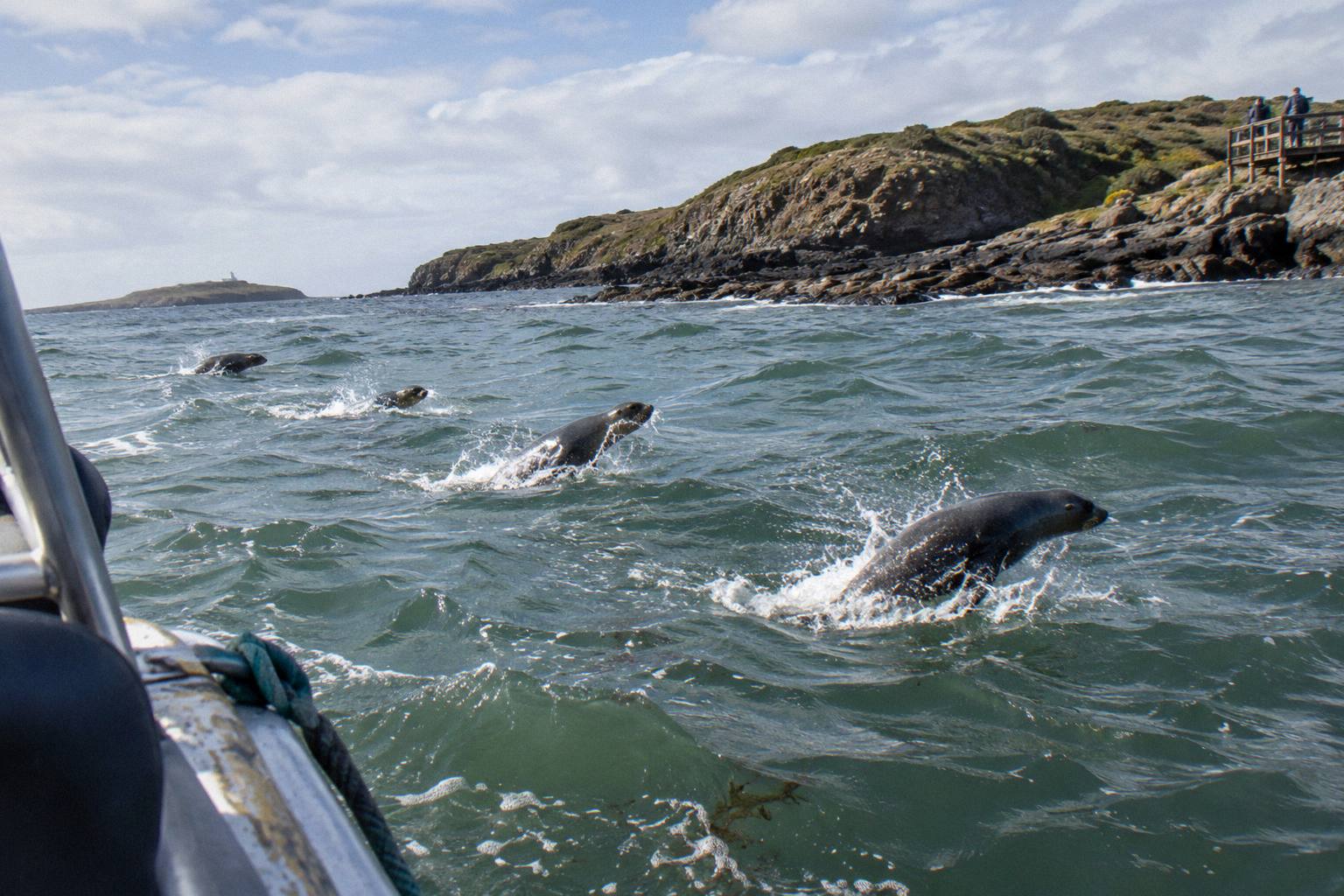
No month produces more seals than another in any figure the operator publishes. The cruise runs all year, and its "an average of 5000+ seals sighted up close" is a marketing average across cruises, never a colony size or a monthly promise. Reported secondary figures put about 20,000 Australian fur seals using the rocks, with 5,000 to 8,000 ashore at one time, and no month is attached to any of them.
That is the starting position, and it reframes the question. Anyone shopping for "the best month" is really shopping for the month whose conditions and colony activity suit them, because no published number ranks December against June. The Department that manages Victorian wildlife describes Seal Rocks as supporting about a quarter of all Victorian seals and as the largest seal-breeding colony in Victoria, and Phillip Island Nature Parks calls it one of Australia's largest. Neither statement has a month on it. What does have months on it is the birth cycle, which is reported rather than official: bulls return in October, births run from the end of October to mid December with a peak in late November to early December, and the large bulls leave in late December.
So a reader who wants the breeding spectacle around them rather than a specific animal count is drawn toward late spring and early summer, while a reader who wants the smallest children on board, the warmest averages or the extra peak sailings picks differently. The colony question of how big Seal Rocks actually is covers the population figures in full, including the published pup counts of 5,660 in 2007, 4,092 in 2013 and 3,865 in 2017, with no later absolute count published.
For the cruise itself, the choice of month changes almost nothing about the product: same 2-hour duration, same 2.00pm departure, same from-price of A$115 per person, same rating pattern of 4.9 from 236 reviews on one booking page and 4.8 from 152 on a second, 380+ reviews combined. Free cancellation up to 24 hours applies on the booking page in every month, which matters when a date is being picked months ahead around an unsettled forecast.
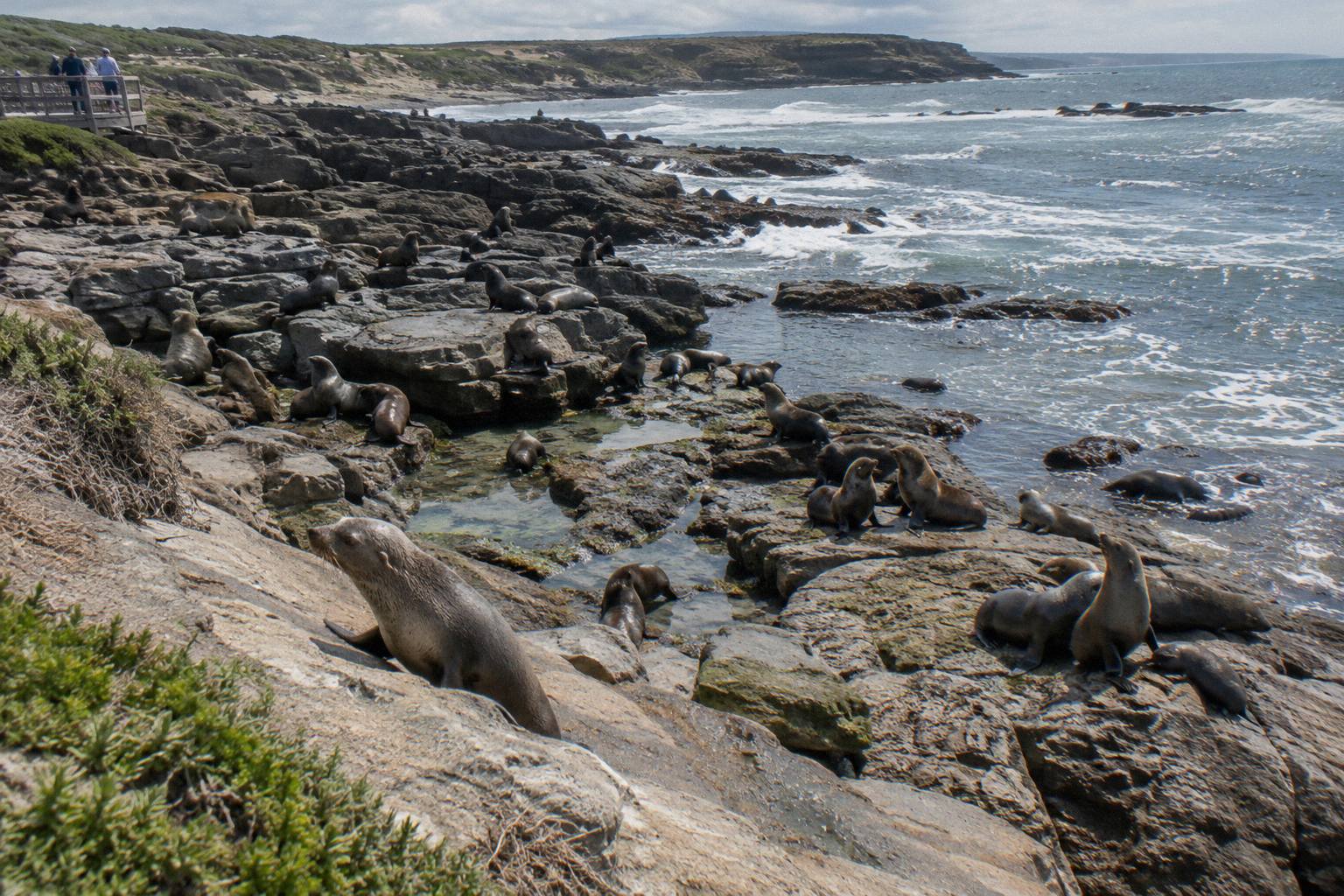
What The Operator Says The Colony Does Each Season?
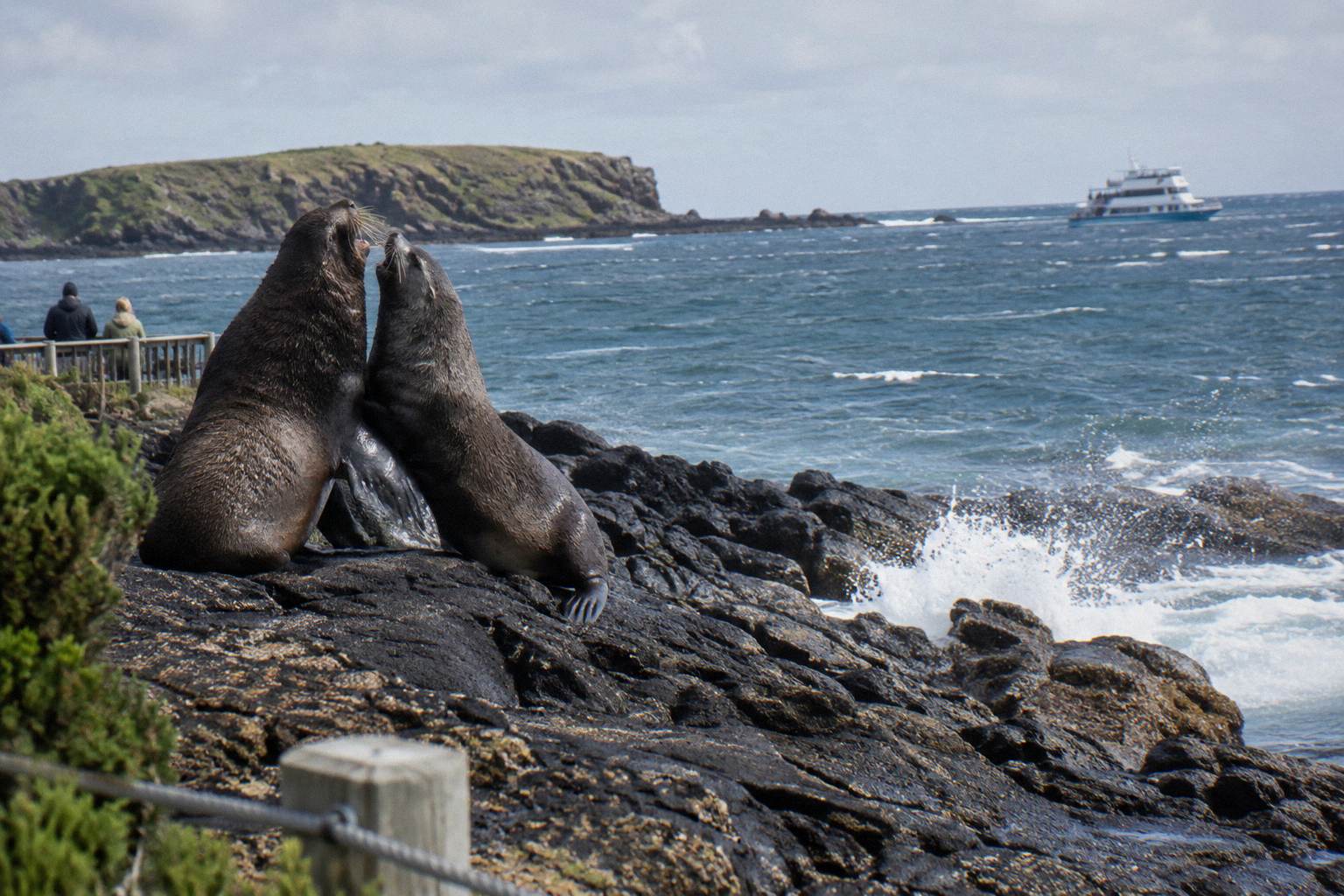
Read against the reported birth timing, the cycle gives each part of the year a character. Late November to early December is the reported peak of births, so an early-summer sailing falls in the busiest stretch of the cycle, while by late December the large bulls have reportedly left and the season has moved toward the pups. Through autumn the operator describes pups playing and moulting, and in winter the colony's story is weaning, which is quieter as a spectacle but pairs with the whale cruises running from the same operator. Spring brings the bulls back to fight for territory ahead of the next birth cycle, with reported arrivals from October.
Two cautions apply, and both come from how little the operator claims. First, none of the seasonal text says a pup or a bull will be visible from the deck on a given sailing; the boat drifts near the rocks, and what is ashore that day is what is ashore. Second, the seasons overlap the calendar loosely: "early summer" pups and "late summer" plunges straddle December, January and February without exact dates, so a reader planning around a specific fortnight should ask the operator when booking what the colony is typically doing then. The deeper version of the pup timing question sits on when seal pups are born and seen.
The table below puts the operator's seasonal words against the two station averages that matter most to a sailing decision: mean daily maximum temperature and rain days of 1 mm or more, both from the Bureau of Meteorology's Rhyll station. Rhyll sits on the north side of the island on Western Port, so treat these as north-coast averages, not a forecast for the open water at Seal Rocks, which has no published sea-state data.
| Month | Operator seasonal wording | Mean max (C) | Rain days 1 mm or more |
|---|---|---|---|
| January | Summer: breeding season, pups born early summer | 24.2 | 5.1 |
| February | Summer: pups take a first rockpool plunge late summer | 24.4 | 4.4 |
| March | Transition to autumn play | 22.8 | 6.1 |
| April | Autumn: pups play, first moult | 19.7 | 8.4 |
| May | Autumn moult continues | 16.5 | 10.8 |
| June | Winter: weaning begins, whale cruises start | 14.1 | 10.1 |
| July | Winter: weaning, coldest month | 13.4 | 12.4 |
| August | Winter: weaning ends, whale cruises close | 14.4 | 12.7 |
| September | Spring: bulls begin returning | 16.2 | 11.5 |
| October | Spring: bulls arrive and fight for territory | 18.2 | 9.7 |
| November | Reported birth peak late November | 20.2 | 8.4 |
| December | Births end mid December, bulls leave late December | 22.0 | 6.6 |
The pattern worth noticing is that the two driest, warmest months on the averages, January and February, are also the months of the peak extra sailings at 11.00am and 4.30pm from 26 Dec to 31 Jan, with the operator's "please check availability" attached. Meanwhile the wettest months by rain-day average, July and August, are exactly the two months carrying the whale cruises. A month can be chosen for weather or for wildlife variety, and in winter both pull in the same direction.
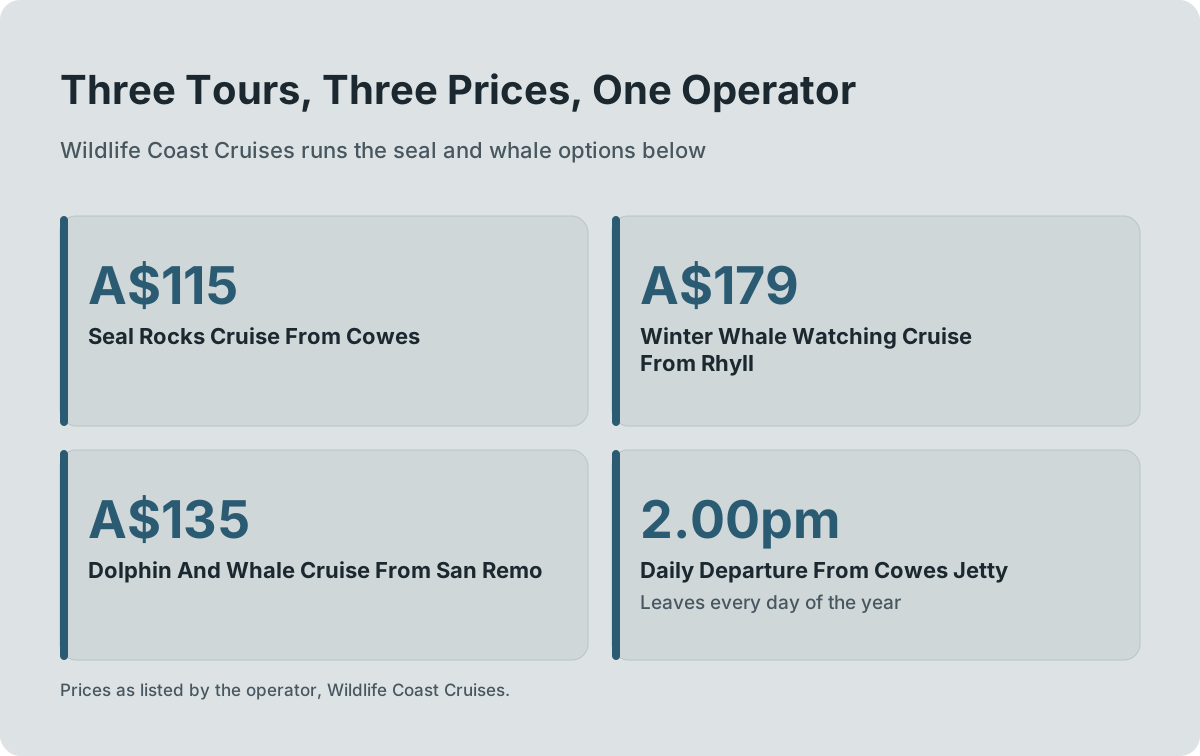
The three tours in that selection cover the whole seasonal spread. The Seal Rocks Cruise From Cowes is the all-year option from A$115 per person, the Winter Whale Watching Cruise From Rhyll is the 4-hour winter morning from A$179, and the Dolphin And Whale Cruise From San Remo is the 3-hour winter afternoon from A$135, all three from the one operator, Wildlife Coast Cruises, which runs five of the seven core tours on these pages from different jetties.
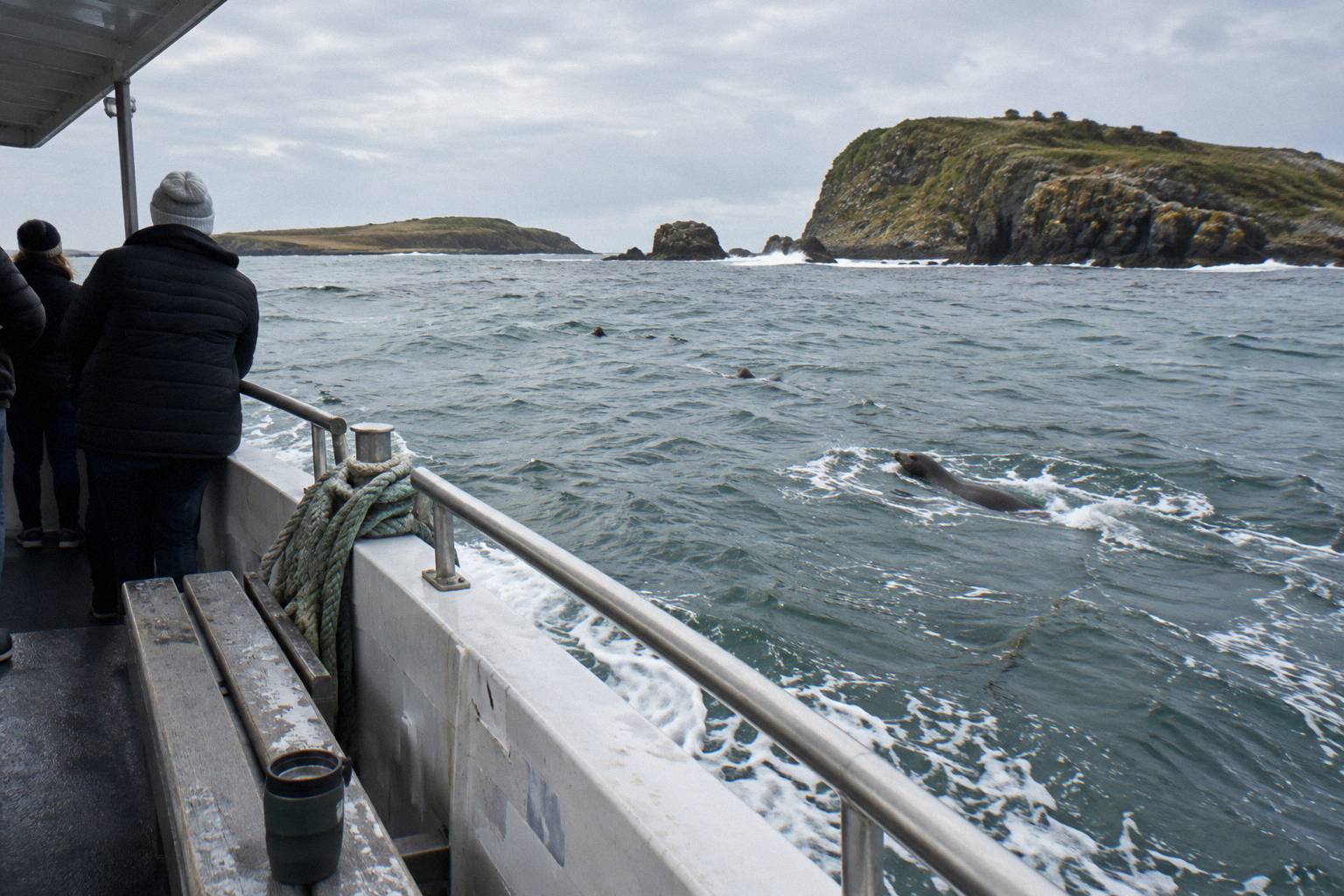
Rain, Wind And Cold: What The Averages Say By Month
The Rhyll station averages say summer is warm and comparatively dry, with mean maxima of 24.2 °C in January and 24.4 °C in February and about five rain days of 1 mm or more. Winter is the opposite: July is the coldest month at a mean maximum of 13.4 °C, and July and August are the wettest at 12.4 and 12.7 rain days. These are north-coast averages, never a sea forecast.
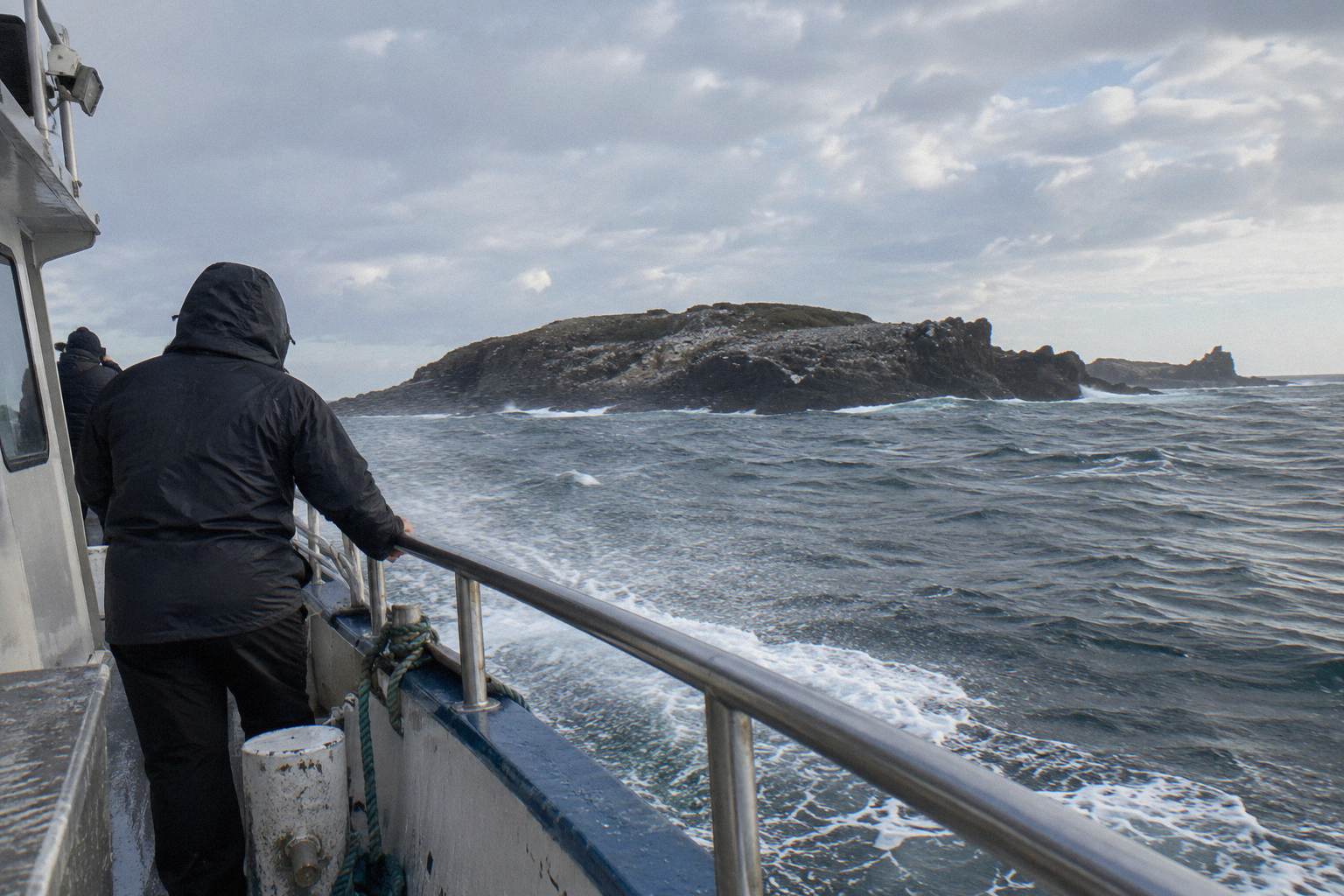
The Bureau's long-run table is the right tool for choosing between, say, April and October, and the wrong tool for deciding whether next Tuesday's sailing will be calm. Wind averages barely separate the months, with mean 3pm wind between 16.3 km/h in May and 21.1 km/h in December, which says little about a given afternoon on open water. The operator's own words on conditions are the ones that matter for the day: the tour "travels into open waters and vessel motion may occur at times, taking motion sickness tablets is recommended", and staff advise booked passengers of sea concerns at least the day prior. The full decision framework for unsettled stomachs sits on handling seasickness on a seal boat tour.
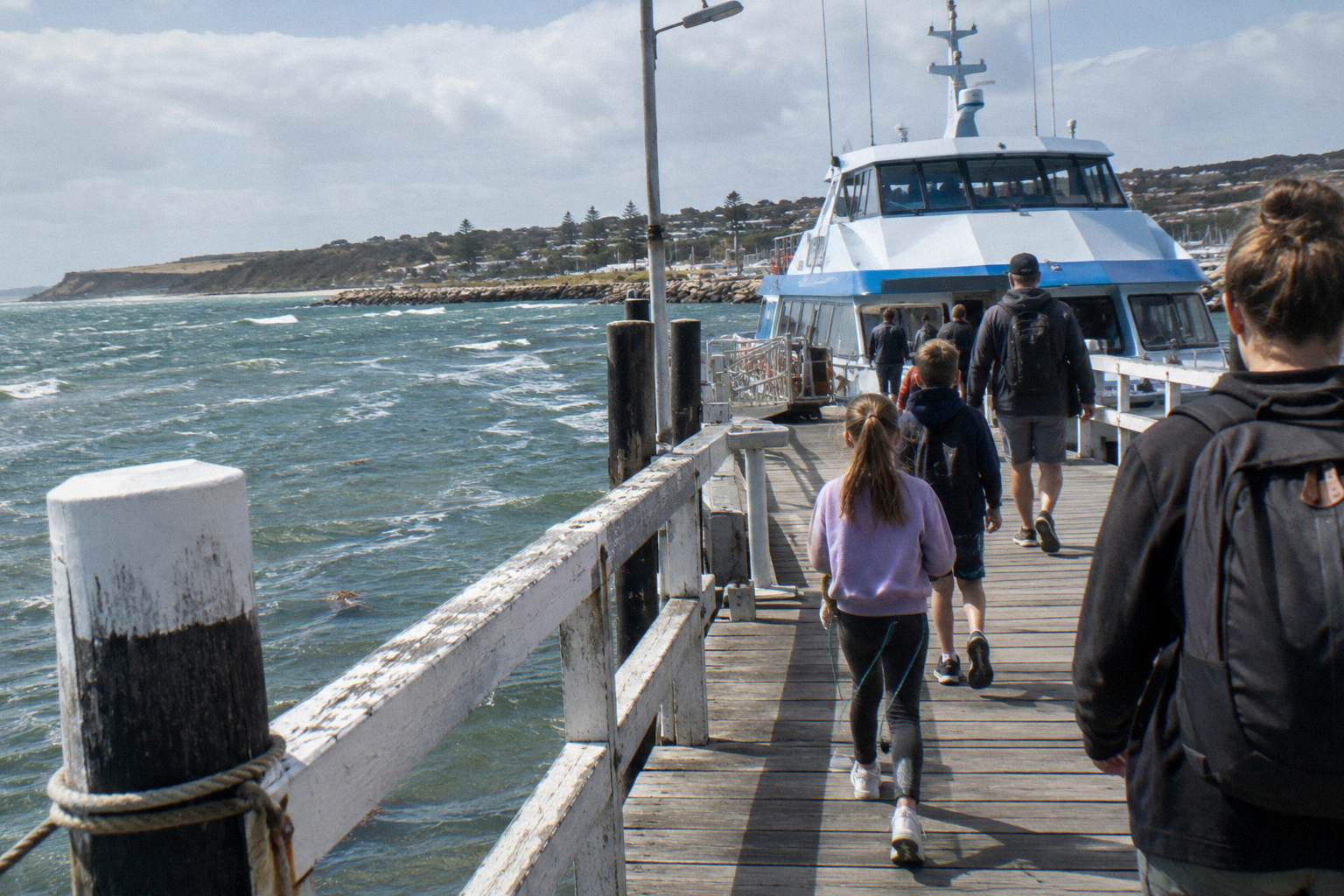
Read as averages, the calendar splits into three bands for a seal cruise. January and February are the warmest and driest, and carry the peak extra sailings, at the cost of being the busiest weeks on the island and the drive. March through May slide from a mean maximum of 22.8 °C down to 16.5 °C while rain days climb from 6.1 to 10.8, an autumn trade of warmth for quiet. June through August are the coldest and wettest months, but they hold the whale cruises, which is why many visitors book winter deliberately. September through December climb back up from 16.2 °C to 22.0 °C while rain days fall back toward 6.6, and the reported birth peak in late November gives late spring a wildlife draw of its own.
Rain itself deserves one note: the booking pages do not say rain cancels a sailing, and cruises are subject to minimum numbers and weather conditions, with a transfer or full refund offered if the operator changes or cancels. The question of whether rain cancels the cruise and where seals go is covered in full elsewhere, so treat the rain-day column as a packing and expectation guide, layered clothing and a rain jacket, rather than a cancellation risk table.
Whichever month wins, the practical next step is the same: check the date on the booking page, where the free cancellation window of up to 24 hours before departure gives room to move a booking if the forecast turns. The operator says it adds no booking fees or surcharges on its own booking page.
Seal Cruise Or Whale Cruise: Which Months Offer What?
The seal cruise runs every month of the year; the whale cruises run only early June to early August. The Winter Whale Watching Cruise From Rhyll is 4 hours, daily, 8:30am to 12:30pm, from A$179 per person, and the Dolphin And Whale Cruise From San Remo is 3 hours, 1pm to 4pm, from A$135, both with the operator's wording "Expected 80-85% - not guaranteed" for whales and "Expected 80%" for dolphins on those cruises only.
That seasonal wall is the single biggest structural fact in the calendar. For nine or ten months of the year the seal cruise from Cowes is the only wildlife cruise of its kind running daily from the island, and no sighting of a whale or dolphin is claimed for it; Nature Parks uses the phrase "regular dolphin sightings" without species or months, and the operator makes no dolphin claim for the Seal Rocks sailing at all. A reader who wants whales must come in the operator's winter window, early June to early August, and a reader who cannot travel then should book the seal cruise on its own merits, not in the hope of a whale passing. The whale cruise versus seal cruise question unpacks that distinction further.
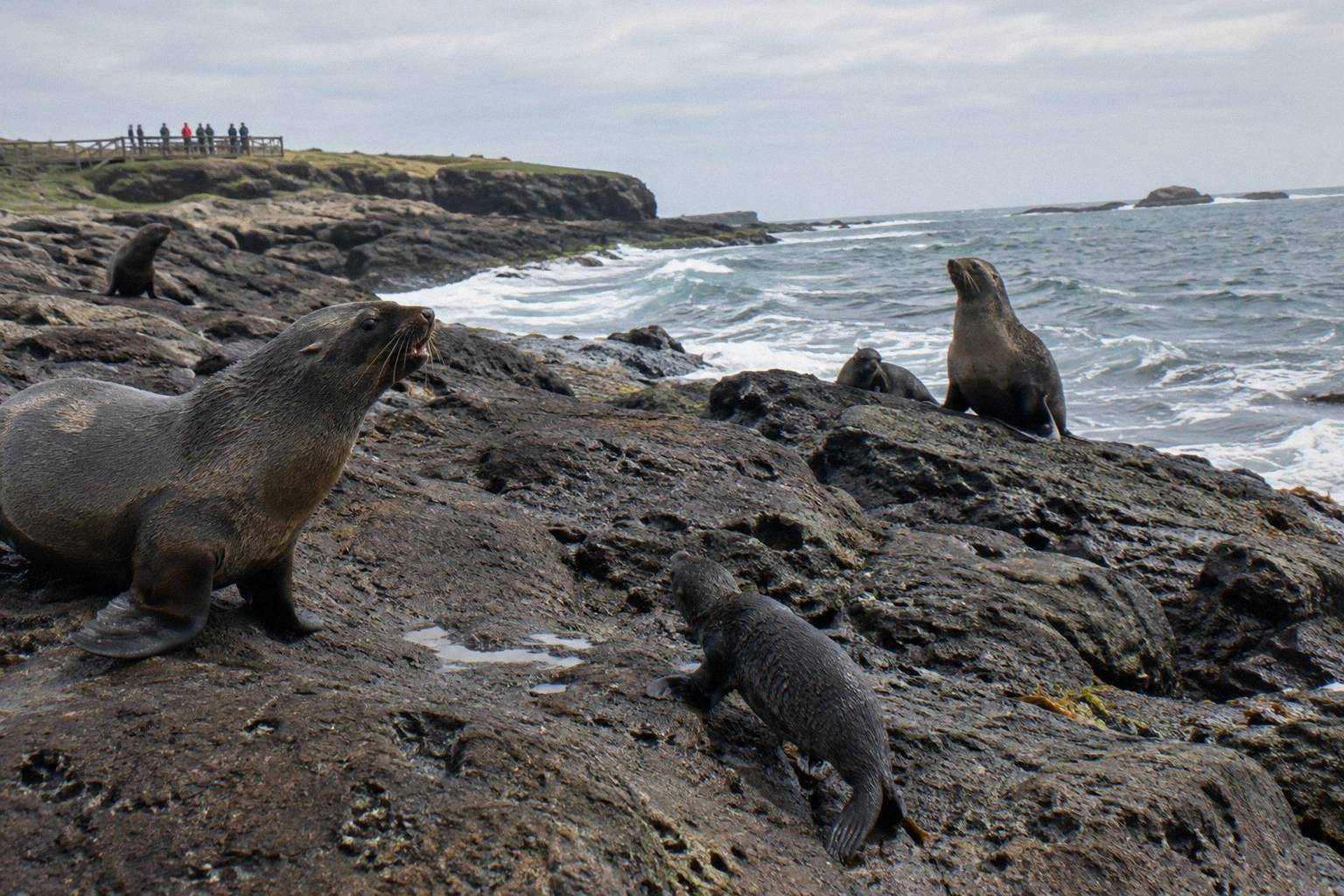
The winter pairing also changes the shape of a day. The whale morning from Rhyll runs 8:30am to 12:30pm and the dolphin and whale afternoon from San Remo runs 1pm to 4pm, while the seal cruise leaves Cowes at 2.00pm, so a winter visitor can theoretically hold a morning whale booking and an afternoon seal sailing on the same day, though the whale cruise from Rhyll also visits Seal Rocks as part of its route, which makes the two less additive than they look. Asking the operator how much the 4-hour route overlaps the 2-hour one is a fair pre-booking question in any winter month.
| Month | Seal Rocks Cruise From Cowes (2 hrs, daily 2.00pm) | Winter Whale Cruise From Rhyll (4 hrs) | Dolphin And Whale Cruise From San Remo (3 hrs) |
|---|---|---|---|
| January | Runs, plus peak extras at 11.00am and 4.30pm from 26 Dec | Not running | Not running |
| February | Runs, peak extras to 31 Jan | Not running | Not running |
| March | Runs daily | Not running | Not running |
| April | Runs daily | Not running | Not running |
| May | Runs daily | Not running | Not running |
| June | Runs daily | Runs daily, early June start | Runs, early June start |
| July | Runs daily | Runs daily | Runs daily |
| August | Runs daily | Runs to early August | Runs to early August |
| September | Runs daily | Not running | Not running |
| October | Runs daily | Not running | Not running |
| November | Runs daily, reported birth peak late in the month | Not running | Not running |
| December | Runs daily, peak extras from 26 Dec | Not running | Not running |
Ratings follow the same pattern across the three. The seal cruise is rated 4.9 from 236 reviews on one booking page and 4.8 from 152 on a second, the whale cruise 4.9 from 28 reviews on one booking page and 4.7 from 97 on a second, and the dolphin and whale cruise 4.6 from 83 on one booking page and 4.8 from 24 on a second. Those are review pools of very different sizes, so read them as what each cruise's own passengers report, never as a ranking of one cruise over another.
For a reader whose whole reason for travelling in winter is whales, the Rhyll cruise is the 4-hour option that visits Seal Rocks as well, with morning tea included in the fare and the operator's "Expected 80-85% - not guaranteed" wording applying to whales and no sighting being guaranteed on any sailing. When booking, ask about the route on your date, since routes can vary with weather.
The San Remo afternoon suits a reader who cannot or does not want a 8:30am start, running 1pm to 4pm with a whale spotter on board and tea, coffee and cake included, from A$135 per person. As with every cruise here, the operator may change or cancel for weather or minimum numbers, and then offers a transfer or full refund.
Picking A Month By Traveller Type
A family tied to school holidays lands in the peak sailing window of late December and January; a couple with free choice lands in the reported birth peak of late November or the warm averages of February and March; a whale-focused visitor must take early June to early August; and a visitor who hates crowds more than cold should look at the shoulder months, May, September and October, when the cruise still runs daily but the island is quieter.
The school-holiday family has the least choice and the most support. The cruise runs daily at 2.00pm in every holiday block, and the 26 December to 31 January window adds the 11.00am and 4.30pm sailings, "please check availability", which gives a family with young children a morning option that still leaves the afternoon free. Child tickets run ages 3 to 15 with infants 0 to 2 free, all children must be supervised by an adult, and the bow deck is restricted to people over 1 metre tall, all covered in detail on taking kids on a seal cruise. January's mean maximum of 24.2 °C with 5.1 rain days makes it the warmest low-risk month on the averages, against the trade of peak-season traffic, with the operator advising extra travel time in late December, January and on long weekends.
The couple choosing freely can optimise for the colony cycle instead of the calendar. Late November into early December carries the reported birth peak, births from the end of October to mid December with the peak late November to early December, and a mean maximum of 20.2 °C in November with 8.4 rain days, a comfortable middle band. February and March are warmer, 24.4 °C and 22.8 °C mean maxima with the two lowest rain-day counts of the year, 4.4 and 6.1, if warmth matters more than the breeding spectacle. Neither choice has a published sighting advantage; the difference is what the colony is doing and what the deck feels like.
| Traveller | Months that fit | Why |
|---|---|---|
| Family in school holidays | Late Dec to late Jan, plus other holiday blocks | Peak extra sailings at 11.00am and 4.30pm from 26 Dec to 31 Jan; child fares ages 3 to 15 |
| Couple, free choice, wants the birth cycle | Late Nov to mid Dec | Reported birth peak late Nov to early Dec; mean max 20.2 °C in Nov |
| Couple wanting warmth | Feb to Mar | Mean max 24.4 °C and 22.8 °C; lowest rain-day counts, 4.4 and 6.1 |
| Whale-focused visitor | Early Jun to early Aug | The only months the whale cruises run; whale wording "Expected 80-85% - not guaranteed" |
| Crowd-averse visitor | May, Sep, Oct | Daily sailings, shoulder-season island, outside peak traffic |
| First-time visitor packing a lot in | Sep to Mar | Seal cruise plus longer daylight for the Penguin Parade, whose arrival is sunset-based |
The first-time visitor deserves the longest think, because a seal cruise is rarely a whole day by itself. The 2.00pm departure and 2-hour duration leave a morning and an evening on the island, and the day built around a 2pm cruise and the Parade shows how the sunset-based Parade arrival slots after the sailing. In the shoulder months the earlier sunsets compress that evening, while from October to March the longer evenings give the land-based parts of the day more room, and the Nobbies boardwalks near the rocks are open while the Nobbies Centre itself remains closed, a status to confirm with Nature Parks on the Nobbies closure question.
A visitor prone to seasickness should note that no month carries a calm-water promise. The operator's advice about open water and motion sickness tablets applies in January exactly as in July, and the winter months pair the highest rain-day averages with the whale cruises that spend up to 4 hours out. The month choice for that reader is any month, paired with the precautions on the seasickness page and a word to the operator when booking.
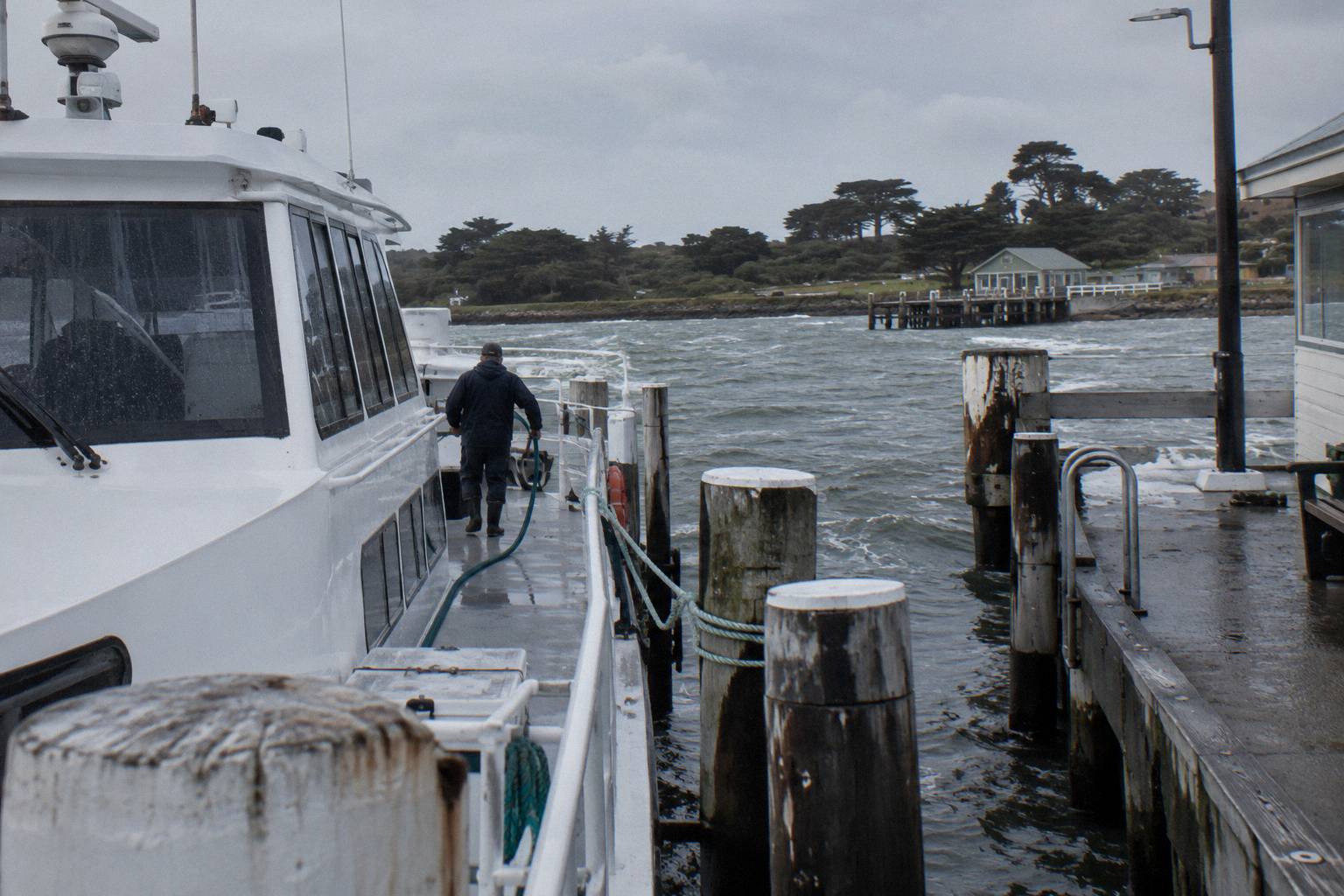
Whatever month the decision lands on, the cruise itself is unchanged: 2 hours from Cowes Jetty, from A$115 per person, with tea, coffee and cake included and live commentary on board. Arriving 30 minutes before departure, with boarding 15 minutes before, is the one clock rule that applies in every season, since the cruise departs on time and a missed sailing is forfeited.
Peak Sailings, Quiet Months And Booking Timing
The peak period is 26 December to 31 January, when Nature Parks lists extra seal sailings at 11.00am and 4.30pm alongside the daily 2.00pm cruise, with "please check availability" attached. Outside that window the calendar holds a single daily sailing, so a reader wanting a specific date or sailing time in a quieter month should check the booking page for their date rather than assume extras.
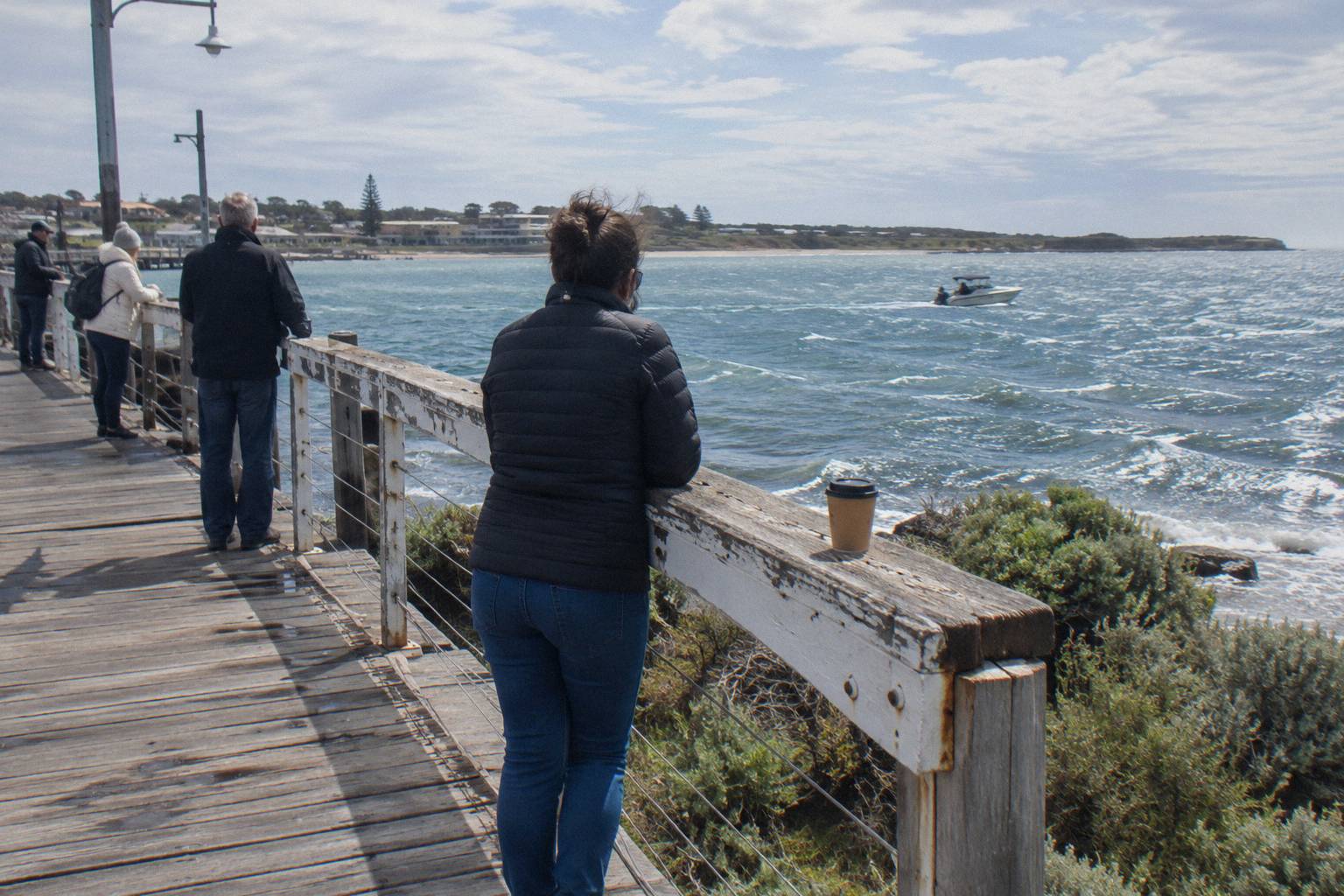
The operator publishes no sell-out rule and no advance-booking requirement for the seal cruise, so nothing here says a month must be booked far ahead; what the calendar does say is that the peak fortnight has more sailings to choose from and more people on the island competing for everything else, from parking near the jetty to Parade tickets, which Nature Parks calls essential, with everyone including infants needing a ticket and arrival being sunset-based. The operator's advice to allow extra travel time in late December, January and on long weekends belongs in any peak-month plan, and the drive is about 90 minutes to two hours from Melbourne, with no train to Cowes and the V/Line coach connection as the public transport route, covered fully on getting to Cowes from Melbourne.
Quiet months invert the trade. May, September and October keep the daily 2.00pm sailing with mean maxima of 16.5 °C, 18.2 °C and 20.2 °C, and September and October carry the spring story the operator tells of bulls arriving and fighting for territory. None of that is a sighting promise, and none of the seasonal text says what a given sailing will show, but for a reader who values an uncrowded deck over warm averages, the shoulder months are the rational pick, and the question of whether to book in advance at all turns on dates rather than seasons.
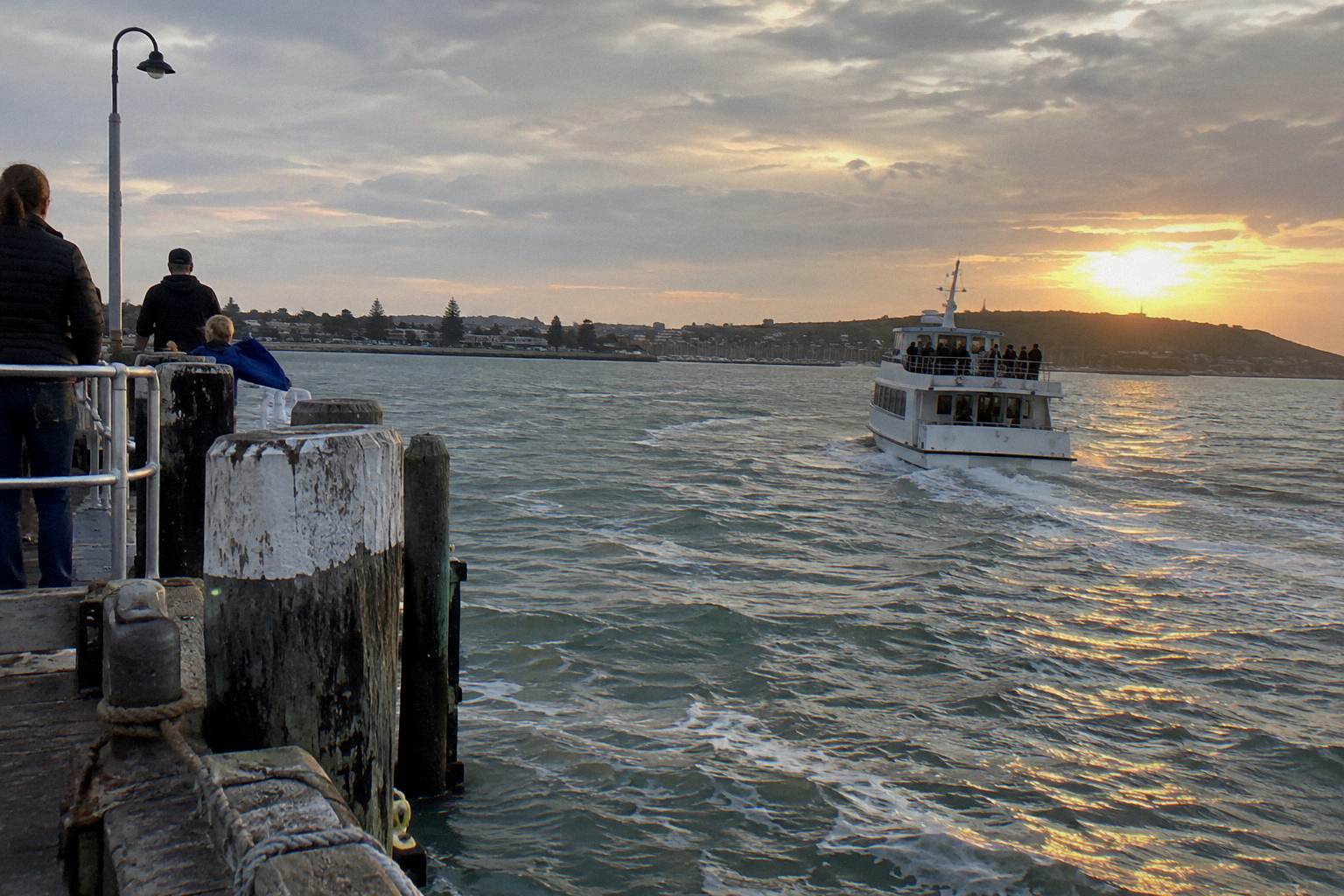
One structural point matters across every month: the operator offers no Melbourne pickup, and a reader without a car in Melbourne is choosing between driving, the coach, the passenger and bicycle ferry from Stony Point, or a day tour that includes the cruise. The Melbourne day trip run by Local Way Tours builds the 2-hour cruise, the Parade at sunset and the Nobbies boardwalk into one 13-hour day from the Arts Centre, with a hop-on bus option on the booking page, so check which option includes the cruise before booking it for the sailing alone.
What To Ask The Operator Before Booking A Month
Ask five things: whether your date falls inside the peak extra-sailing window of 26 Dec to 31 Jan; what the colony is typically doing in your month; whether the sea conditions advice has anything specific for your date, since staff advise booked passengers at least the day prior; which fare categories apply, with the booking page showing the amount for your date; and, in winter, how the whale cruise route overlaps the seal cruise route.
Those five questions come straight from the operator's published rules, and each one closes a gap the calendar pages leave open. The peak-sailing question matters because the extra 11.00am and 4.30pm departures exist only in the summer window; the seasonal question matters because the operator's four-part cycle, breeding, play and moult, weaning, bulls returning, is wording rather than a dated timetable; the sea question matters because the operator commits to advising booked passengers of sea concerns at least the day prior, which only works if it has a way to reach you; the fare question matters because only the from-price of A$115 is printed here and the other category amounts sit on the booking page; and the winter route question matters because the 4-hour whale cruise also visits Seal Rocks.
Booking itself is the same in every month: free cancellation up to 24 hours before departure on the booking page, with cancellations inside 24 hours or a no-show forfeiting the fare, and the operator able to change or cancel for weather or minimum numbers with a transfer or full refund offered. The refund mechanics are laid out on what happens if the cruise is cancelled, including the point that a missed sailing is non-transferable and non-refundable.
If the date is still open, Check availability on the sailing calendar before committing to a month, since the live dates show which sailings exist for the window you are weighing. For the full set of seal and wildlife cruises from Cowes, San Remo and Rhyll, Phillip Island Seal Cruises lists them with fares and departure points.
Mistakes To Avoid When Picking Your Month
Five mistakes repeat across the calendar: booking a whale hope into a summer seal cruise, when the whale cruises run only early June to early August; reading the July and August rain-day averages as a cancellation forecast; assuming pups will be visible because the month falls in the birth window; ignoring the 30-minute arrival rule, since the cruise departs on time and a missed sailing is forfeited; and planning a Melbourne pickup that does not exist.
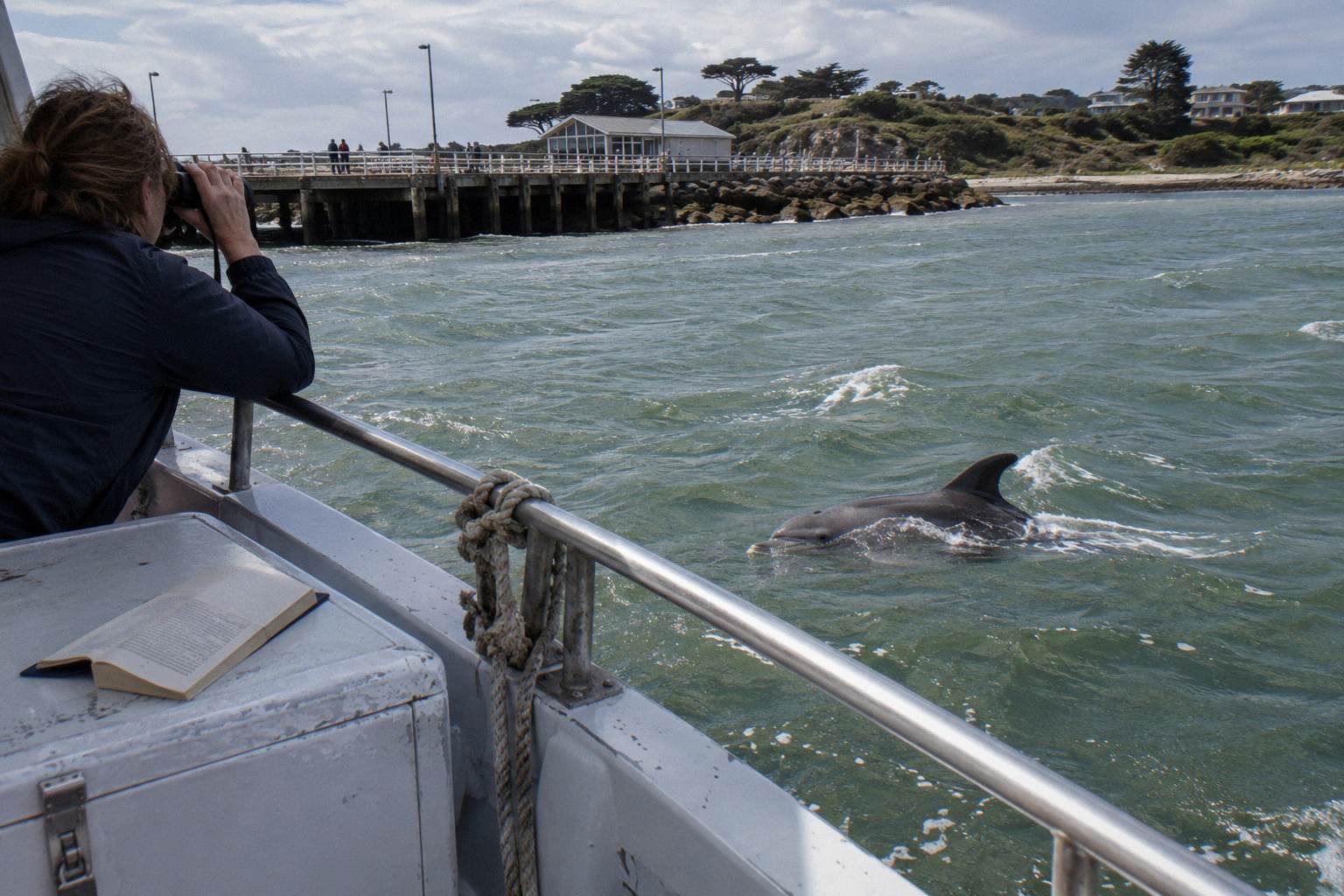
- Expecting whales or dolphins on the seal cruise in any month. The operator claims neither for the Cowes sailing, and no sighting is guaranteed on any cruise.
- Treating "an average of 5000+ seals sighted up close" as a monthly promise. It is a marketing average across cruises, not a count for your date.
- Assuming the Nobbies Centre is open for a pre- or post-cruise visit. The boardwalks and car park are open; the centre, cafe and toilets are closed, and status should be confirmed with Nature Parks.
- Mixing up the child age scales. The cruise uses 3 to 15 for child tickets and 0 to 2 for infants; the Nature Parks venues use a different scale, and the two never interchange.
- Forgetting that the sunset cruise promises no seals. A September to March evening addition is a music-and-nibbles sailing, not a second wildlife trip.
- Planning winter around the 1pm dolphin and whale cruise and the 2pm seal cruise on the same day. The whale morning from Rhyll already visits Seal Rocks, so ask the operator about overlap first.
Common Questions About The Best Month For A Seal Cruise
What Is The Best Month For A Seal Cruise On Phillip Island?
There is no single best month. The Seal Rocks Cruise From Cowes runs daily at 2.00pm all year, from A$115 per person, and the operator's seasonal cycle changes what the colony is doing rather than whether it is there. Late November to early December is the reported birth peak, February and March have the warmest and driest station averages, and early June to early August is the only window for the whale cruises.
Are Seal Pups Visible On The Cruise In Summer?
The operator says pups are born in early summer and take a first rockpool plunge in late summer, but it never promises a pup will be visible from the boat on a given sailing. Reported timing puts births from the end of October to mid December, with a peak in late November to early December.
Is Winter Too Cold Or Wet For The Seal Cruise?
July is the coldest month on the Rhyll station averages, with a mean maximum of 13.4 °C and a mean minimum of 8.2 °C, and July and August have the most rain days at 12.4 and 12.7. Those are north-coast averages, not a sailing forecast, and rain is not a stated cancellation reason; the operator decides on weather and minimum numbers and offers a transfer or full refund if it cancels.
Can You See Whales On A Seal Cruise?
Not as a booked expectation. The whale cruises run only early June to early August, and the operator's wording "Expected 80-85% - not guaranteed" applies to those winter cruises, not to the Seal Rocks sailing, which makes no whale or dolphin claim in any month.
Do The Extra Sailings Run All Summer?
The peak extra seal sailings at 11.00am and 4.30pm run from 26 December to 31 January, with "please check availability" attached, alongside the daily 2.00pm cruise. Outside that window there is one sailing a day.
Which Month Is Quietest On The Island?
The shoulder months of May, September and October sit outside the peak window and the school-holiday blocks, while the cruise still runs daily at 2.00pm. The operator advises extra travel time in late December, January and on long weekends, which marks the busy periods by contrast.